
What cosmetic dentistry covers
Cosmetic dentistry is everything that changes how your smile looks: the colour, the shape of the teeth, how much of them shows when you speak, how much gum is on display and whether they are aligned.
Almost nobody arrives asking for a specific treatment. They arrive saying what bothers them, and it is usually one of four things: the teeth are yellow, one is crooked or chipped, too much gum shows when smiling, or there are gaps. Each of those has a different solution at a very different cost, and this page exists so you know which one is yours before you sit in the chair.
One warning that saves money: cosmetic work comes last. If there is decay, tartar or bleeding gums, that gets sorted first, because whitening over inflamed gum hurts and a veneer bonded to a tooth in poor condition does not last.
What can be done, and what each thing is for
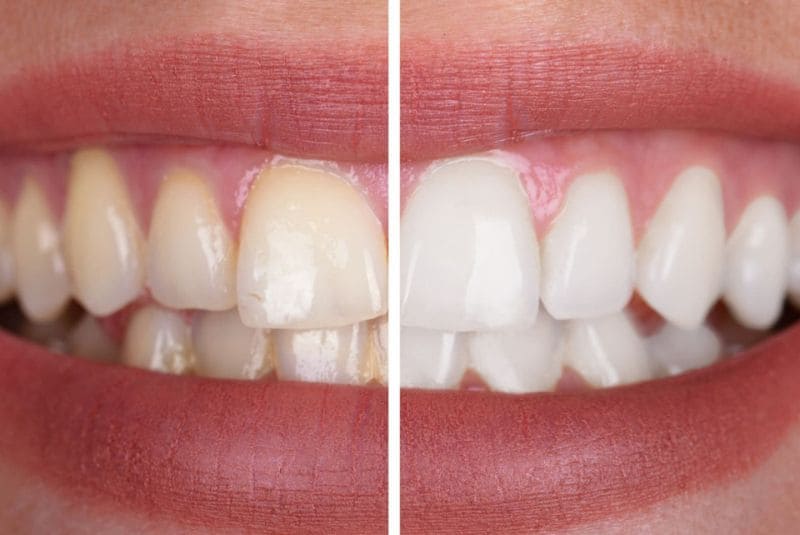
Teeth Whitening
For yellow or dull teeth. The quickest and cheapest of everything on this page.

Dental Veneers
Thin laminates over the tooth. They change shape, colour and small irregularities all at once.
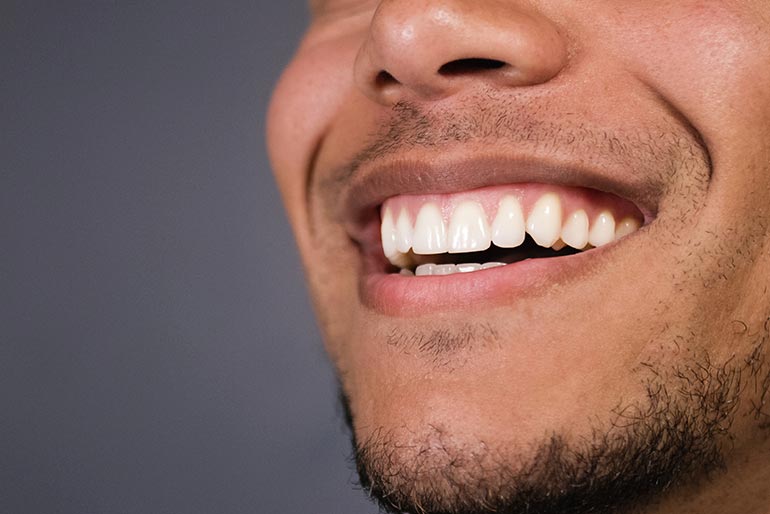
Gingival Smile
For when a smile shows more gum than tooth. The gum is reshaped and the teeth look longer.

Dental reconstruction
Rebuilds a chipped or badly worn tooth and gives it its shape back without removing more than necessary.

Invisible Orthodontics
Clear aligners that straighten teeth without anyone noticing you are in treatment.

Dental Implants
For gaps. It replaces root and tooth, and stops the bone in that area wasting away.
Looks and health are not separate things
Separating looks from health is a convenient way to sell, and it is false. A crooked tooth is harder to clean and collects tartar; a bite that does not meet wears the enamel; a receding gum leaves the root exposed and causes sensitivity.
So the plan looks at both at once. Sometimes what looked like a veneer case is better solved with orthodontics, which takes longer but removes nothing; and sometimes it is the other way round. That comparison is what the first appointment should give you.
Teeth whitening
It lightens the shade of the enamel. It works well on the yellowing of age, on coffee, tea and wine, and it does not work on internal staining or on crowns and composites, which do not change colour: if you have one on a front tooth, that has to be part of the plan, because the mismatch will show afterwards.
It is done in the clinic, at home with trays, or both combined. Sensitivity to cold for a few days is normal and passes.
Veneers
Thin laminates bonded to the visible face of the tooth. They are what changes a smile most in one go, because they correct colour, shape and slight rotations at the same time.
The important decision is not which material but how much tooth has to be touched. Composite veneers are done in one visit and are reversible. Porcelain lasts longer and resists staining better, but usually means removing a layer of enamel, and that cannot be undone.
Tooth and gum contouring
A very small amount of enamel or gum tissue is removed to balance the smile. It is quick and barely invasive, and it solves two specific things: a tooth that sticks slightly out of line, and a gum that covers part of the front teeth.
Implants in the smile zone
Replacing a front tooth with an implant is the most demanding case in implantology, because there it is not enough for the tooth to work: it has to emerge from the gum with the same shape as its neighbour and the same colour.
The position is planned around how the crown will look, and the volume of gum around it is looked after, which is what really gives away a badly placed implant.
Clear aligners
Clear aligners move the teeth with nothing bonded to the outside, and they come out to eat and brush.
They are often the honest alternative to veneers: if the problem is position rather than colour or shape, straightening removes not one millimetre of enamel. It takes months instead of weeks, and that is the trade-off.
Seeing the result before you start
Digital smile design means seeing the result before anything is touched. From photographs of your face and a scan of your mouth, a simulation is built with the shape, size and colour your teeth would have when finished.
Its use is the thing nobody says out loud: it lets you argue. On screen you can ask for the front teeth a little longer, or shorter, or not all identical, and see it immediately. Saying no to a simulation is far easier than saying no to veneers already bonded on.
From the approved simulation come temporaries that are worn for a few days, and that is where you find out what a screen cannot tell you: how it looks when you speak, whether it interferes with your bite and what the people around you think. Only then are the final ones made.
How your plan is decided
The plan comes out of the first appointment, which is free, and out of three things looked at in this order.
First, what bothers you. That is not a polite question: two people with the same mouth ask for different things, and treating what the dentist sees rather than what the patient asked for is the commonest way a technically correct result fails to please.
Second, what has to be dealt with first. Decay, gums, a missing molar that has let the others drift.
And third, the real options for your case, with their timeline and their price, and with what each one asks of you in return: how much enamel is touched, how long it takes and how often it will need reviewing. In writing, not just spoken.

How we work
What is unhealthy comes before what is pretty. Before whitening or veneers, decay, tartar and gums are treated. That is not a house rule, it is that otherwise the result does not last and sometimes hurts.
You are told what it costs and what it costs to maintain. Cosmetic treatment rarely ends the day you walk out: veneers get checked, whitening gets topped up, and a night guard is usually part of the package if you clench. That goes in the quote from the start, not as a surprise two years later.
You are also told when you do not need it. Some mouths do not need ten veneers but two teeth straightened, and some stains do not respond to whitening. Saying so loses a sale and avoids an unhappy patient, which costs more.
What is irreversible is flagged as irreversible. Removing enamel cannot be undone. When a reversible option solves your case, it goes on the table even if it is slower or leaves less margin.
Frequently Asked Questions
What are the most common cosmetic dentistry treatments?
In order of what is asked for most: whitening, veneers, clear aligners, gum recontouring and rebuilds. Which one you need depends on what bothers you, not on what is fashionable.
As a quick rule: if the problem is COLOUR, start with whitening; if it is POSITION, with orthodontics; if it is SHAPE or there are chipped teeth, with veneers or a rebuild; and if a lot of GUM shows, with recontouring.
What types of teeth whitening are there?
Two, and they are usually combined. In-clinic whitening is done in one session with a stronger product and the gum isolated; home whitening uses trays made to fit you, worn for a while each day over a couple of weeks.
What is not advisable is a supermarket product with no check-up first: if there is decay or a receding gum, the gel gets where it should not and it hurts. The result also holds better with occasional top-ups using the trays than by repeating strong sessions.
What is digital smile design?
It is a simulation of the result, built on photographs of your face and a scan of your mouth, so it can be seen and discussed before starting.
Its real value is not the pretty picture: it is that it lets you say no, and change the shape or length of the teeth while changing them still costs nothing. From the approved simulation, temporaries are made and tried in the mouth for a few days before the final ones are built.
How is the planning of a dental esthetic treatment carried out?
It is looked at in this order: what bothers you, what has to be treated first, and which options solve the first without spoiling the second.
Out of that comes a plan with the alternatives compared, not a single proposal: how long each takes, what it costs, how much tooth has to be touched and how often it will need reviewing. In writing, so you can think about it at home or get a second opinion.
What are the options for improving dental symmetry?
It depends where the asymmetry is. If it is the edges of the teeth, enamel recontouring fixes it in one visit. If it is the gum line, so that one tooth looks shorter than its twin, the gum is recontoured.
If what is off is the position of the teeth, neither of those helps and the answer is orthodontics: covering a positional asymmetry with veneers means removing far more from one side than the other.
Is it necessary to treat cavities before cosmetic treatment?
Yes, always, and it is not a formality. A veneer or crown bonded over a decayed tooth seals the problem underneath, where it cannot be seen and carries on; and an inflamed gum bleeds when isolated, which ruins the bond.
The same goes for tartar and for periodontitis. Treating it first is cheaper than redoing the cosmetic work a year later.
What are the risks involved in cosmetic dental treatments?
There are some, and they are known. Whitening causes sensitivity to cold for a few days and can irritate the gum if the gel escapes. Veneers and crowns that require enamel removal cannot be undone: that tooth will have something on it for the rest of its life. Gum recontouring can leave some sensitivity at first.
The most expensive risk, though, is not clinical: it is having cosmetic treatment with untreated gums or decay. What fails there is not the material, it is the order.
Are dental esthetic treatments permanent?
None of them is. Whitening fades and gets topped up; composite veneers need polishing and sometimes replacing after a few years; porcelain lasts longer, but it is a material that can also fracture; and gum recontouring is stable unless there is gum disease underneath.
What extends any of them is the usual: hygiene, check-ups and, if you clench at night, a night guard.
How much does a cosmetic dentistry treatment cost in Barcelona?
It depends on the treatment, which is why each price lives on its own page, where it is kept up to date. What changes the total is less the tariff than the number of teeth involved and whether something has to be treated first.
The first appointment is free and includes the assessment, and out of it comes a fixed written quote. If you have a quote from another clinic, bring it: comparing two plans is more useful than comparing two figures, because they almost never include the same things.