
Dental veneers in Barcelona
A dental veneer is a very thin layer bonded to the visible face of the tooth, changing its colour, its shape and its proportion without moving it. Here a composite veneer costs 70 euros and a porcelain one 320 euros per tooth. How long a veneer lasts depends on the material, but also on your gums, your bite and your habits.
The ideal solution for a radiant smile
If you are looking to improve the look of your smile in Barcelona, the first thing to ask about a veneer is not the material but how much enamel has to be removed, because that decides whether the treatment can be undone. These thin veneers are bonded to the front of the teeth.
In our clinic located in Barcelona, we specialize in this treatment that is placed without cutting the tooth whenever the case allows it, giving you the feeling of having your natural teeth. Dental veneers not only improve the visual appearance of your smile, but also provide a durable and long-lasting solution.
We use high quality materials, the custom design ensures perfect harmony with your facial features, ensuring a smile that looks natural and attractive. How much tooth is touched depends on the material. Composite almost never needs any reduction, feldspathic porcelain can be thinner than half a millimeter, and pressed ceramics such as lithium disilicate usually mean reducing the enamel for good.
In short, if you want to improve the appearance of your teeth and get a radiant smile that makes you feel confident and satisfied, dental veneers invite you to visit us at Barcelona for a free consultation.
When are dental veneers recommended?
A veneer solves four specific problems very well, and does not solve others, even though they are sometimes sold the same way. These are the cases where, with a healthy mouth, it tends to be the option that removes the least tooth for the result you are after:
Stained or Discolored Teeth: If you have teeth that have suffered discoloration that cannot be corrected with teeth whitening, veneers are an excellent alternative. They are able to cover stubborn stains and provide a brighter, more uniform smile.
Chipped or Cracked Teeth: Veneers can restore the appearance of teeth that have suffered small fractures or chips, restoring their natural shape and appearance.
Uneven Teeth or Gaps: If you have uneven teeth or noticeable gaps between them, veneers can be a quick and effective solution. They allow you to create a more aligned and uniform smile without the need for orthodontics.
Irregularly Shaped or Worn Teeth: In cases of irregularly shaped teeth or teeth that have suffered wear, veneers can reshape them and offer a more harmonious and esthetic smile. General Smile Enhancement: In addition to correcting specific problems, dental veneers are ideal for those who want an overall aesthetic improvement of their smile. They are a quick and effective solution for spectacular results.
Types of dental veneers
Composite veneers
The most reversible and the most affordable, 70 € per tooth on our price list. It is shaped directly on the tooth in one or two appointments, with no laboratory involved. Since in most cases no preparation is needed, the enamel is kept: if you want something different later, the tooth is still whole underneath.
Its trade-off is real and we say so: it takes up staining from coffee, tea, wine and tobacco, and loses shine over the years. In exchange it can be polished and repaired in the chair, which a ceramic veneer cannot. There is no fixed lifespan, but in clinical trials 88% were still in place after two to eight years.
Zirconia veneers
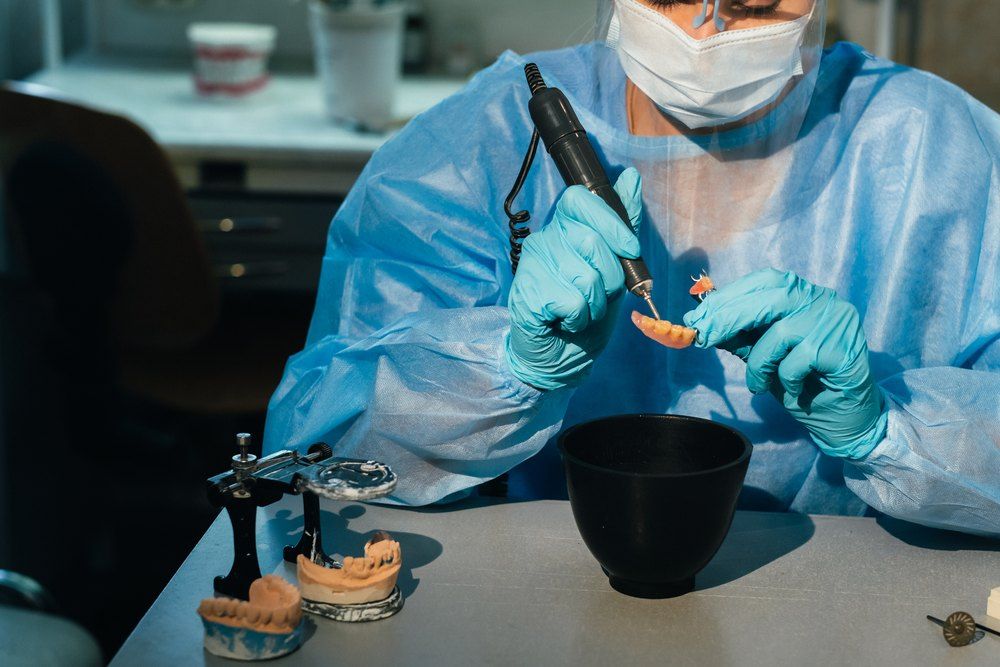
The strongest, 320 € per tooth. Zirconium oxide is around 900 MPa of flexural strength, of the order of three times that of a disilicate ceramic. That is why it is the one chosen when the tooth takes force: bruxism already under control, deep bites, or veneers that also have to rebuild a badly worn edge.
It is also the least translucent of the ceramics, which works in its favour when a dark tooth has to be covered and against it when maximum realism is wanted on a central incisor. That is exactly the conversation to have at the assessment.
Porcelain veneers
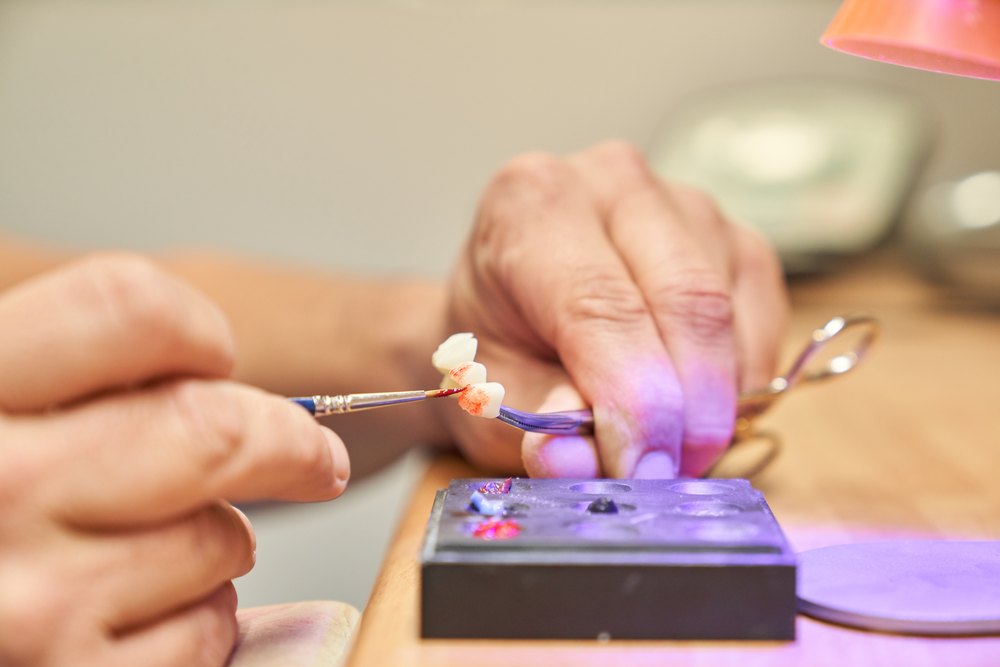
The balance between appearance and strength, 320 € per tooth, and the usual choice for a full case of incisors and canines. It is made in a laboratory on a model of your mouth, so colour and texture are worked tooth by tooth instead of being adjusted in the chair.
The glazed surface does not take up staining: after ten years the colour is the colour of the first day. They are an excellent option for those looking to significantly improve their smile.
Feldspathic veneers
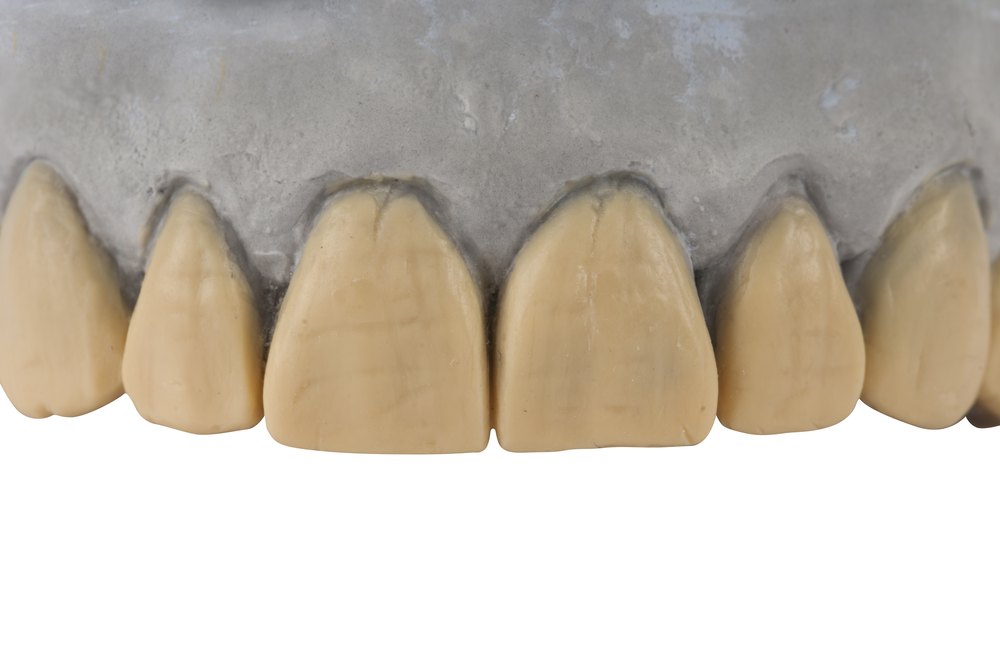
The thinnest and the most natural, 320 € per tooth. It is built up by hand, layer by layer, on a refractory model, and can be taken down to 0.3 to 0.5 mm, half of what a pressed ceramic needs.
That means in many cases the tooth does not have to be prepared, or barely, and that is its real argument: not that it is the prettiest, but that it asks the least of the tooth.
Its flexural strength is the lowest of the group, so it is not indicated over bruxism without a splint, nor on teeth that carry heavy load. On a well-chosen upper incisor it is, by a distance, the one that best imitates enamel.
Lithium disilicate veneers
Lithium disilicate, the material known commercially as e.max, 320 € per tooth. Around 360 to 400 MPa of flexural strength: three to four times that of a feldspathic veneer and below zirconia. It is the material that forces the fewest trade-offs.
It keeps enough translucency for an incisor and withstands what a feldspathic veneer would not, so it tends to be the answer when a case is neither purely aesthetic nor clearly about strength. It bonds to the enamel with adhesive cementation, and that is the part no brochure mentions: much of the ten-year result depends on the isolation during that cementation, not on the material written in the quote.
The five materials above do not compete with each other: each one wins in a different case. Composite if you want it reversible and inexpensive, feldspathic if you want to remove as little enamel as possible, zirconia if the bite is heavy, porcelain and disilicate if you are after the balance.
What decides is not the catalogue, it is your enamel and your bite. At the first visit, which is free, the study is done and a concrete plan comes out of it: which material, how many teeth, how much preparation and what fixed price. If in your case a veneer is not the answer, it says that too.
Price of dental veneers
The price of a veneer depends on the material and the laboratory, not on the city. What does change between clinics is what the figure includes: the study, the digital design, the temporaries you try on before any preparation, and the follow-up visits. A cheap veneer with no temporaries is not the same veneer.
These are our prices per tooth, closed and published. The study and the digital design are included, and the first assessment visit is free:
- Composite veneer: 70 €, usually no preparation and reversible
- Zirconia veneer: 320 €, the strongest
- Porcelain veneer: 320 €, the usual balance
- Feldspathic veneer: 320 €, the thinnest, 0.3 to 0.5 mm
- Lithium disilicate veneer: 320 €, strength and aesthetics
A full case is not a matter of multiplying by eight: it is planned as a whole and the number of teeth comes out of the study. If your case first needs a cleaning, gum treatment or orthodontics, it appears in the quote from the start and not halfway through.

Request your free assessment appointment
At Clínica Dental Barcelona, we are committed to keep you smiling as always. Our team is ready to answer your questions, schedule appointments and provide you with all the additional information you need. If you want more information about any treatment or want us to call you to schedule an appointment you can fill out the form, we will try to call you as soon as possible.
How long do dental veneers last?
Dental veneers are not permanent and generally have a limited duration. The time will depend on the type of veneer material, the patient’s dental care and other personal habits. Eating nuts, snacking, nail biting, etc. is not recommended, especially at the beginning of their placement.
The following is a description of the typical duration of dental veneers depending on the material: Porcelain veneers tend to be more durable than composite veneers. In a review of 13 clinical studies, 89% of ceramic veneers were still in place after a median of nine years. Composite resin veneers: in trials, 88% were still in place after two to eight years, with more touch-ups.
Over time, they may stain more easily and require more frequent replacement or touch-ups. Proper care and dental hygiene are essential to prolong the life of veneers. This includes brushing your teeth regularly, flossing, avoiding biting on hard objects and following your dentist’s recommendations for maintenance and regular check-ups.
Veneer placement process
The process of placing dental veneers is completely personalized and begins with a photographic study, which includes extraoral photographs (face, lips and smile) and intraoral photographs.
This is followed by a digital design of the smile, in which the shape and position of the teeth are adjusted to the characteristics of each patient, taking into account the type of face, the shape of the lips, the thickness of the lips and the width of the mouth. Once the digital design is finished, a mock-up of the patient’s mouth is created with the final design.
From this mock-up, provisional veneers are made and placed in the patient’s mouth so that he/she can see live how the veneers treatment will look like once it is finished. The main advantage of this technique is that the patient has the opportunity to participate in making decisions about the shape and color of the veneers, even being able to imitate specific tooth shapes.
Advantages of dental veneers
Improves esthetics: Dental veneers can correct esthetic problems such as: stained, misaligned, crooked, gapped or irregularly shaped teeth, providing a more attractive smile. Preservation of the natural tooth: A crown wraps the whole tooth, while a veneer covers only its visible face, and less tooth touched today means more options twenty years from now.
Durability: A veneer is not forever. Ceramic veneers keep their color and have clinical follow-ups of up to twenty years, while composite takes up some staining and needs polishing along the way. Fast results: The procedure to place dental veneers is usually fast and provides almost immediate results compared to other orthodontic or restorative dental treatments.
Same-day recovery: When the tooth has to be prepared, it is done under local anesthesia, and most people go back to their normal routine the same day.
Frequently asked questions
How long does a dental veneer last?
It depends on the material and on your bite. In clinical trials, 88% of composite veneers were still in place after two to eight years, and they can be polished and repaired in the chair. With ceramic, a review of 13 clinical studies found 89% still in place after a median of nine years, and its glazed surface keeps its color.
Does the tooth have to be filed down for a veneer?
Not always. A composite veneer needs no preparation in most cases, and a feldspathic veneer can be taken down to 0.3 to 0.5 mm, so the tooth is often barely touched. How much enamel your case needs to lose is decided at the assessment, with the study in front of you.
How much does a dental veneer cost in Barcelona?
Our prices are per tooth, closed and published: 70 euros for a composite veneer and 320 euros for zirconia, porcelain, feldspathic or lithium disilicate. The study, the digital design and the first assessment visit are included.
Can a veneer fix a tooth that whitening did not?
Yes, and it is one of the four problems a veneer solves well: discolouration that does not respond to whitening. Before going to a veneer we check whether whitening, microabrasion or internal bleaching can get there first, because those take less tooth away.
Is it advisable to get dental veneers?
Yes, when the problem is colour or shape and the mouth is healthy: stains that whitening does not remove, chipped or worn edges, small gaps between the teeth, and small or cone-shaped teeth. They are not the answer when the problem is position, which is corrected with orthodontics, or when there is active decay or inflamed gum, which are treated first.
If the tooth has lost a lot of structure, what holds up is a crown. In your case it is decided at the assessment, with the photos and the design in front of you.
