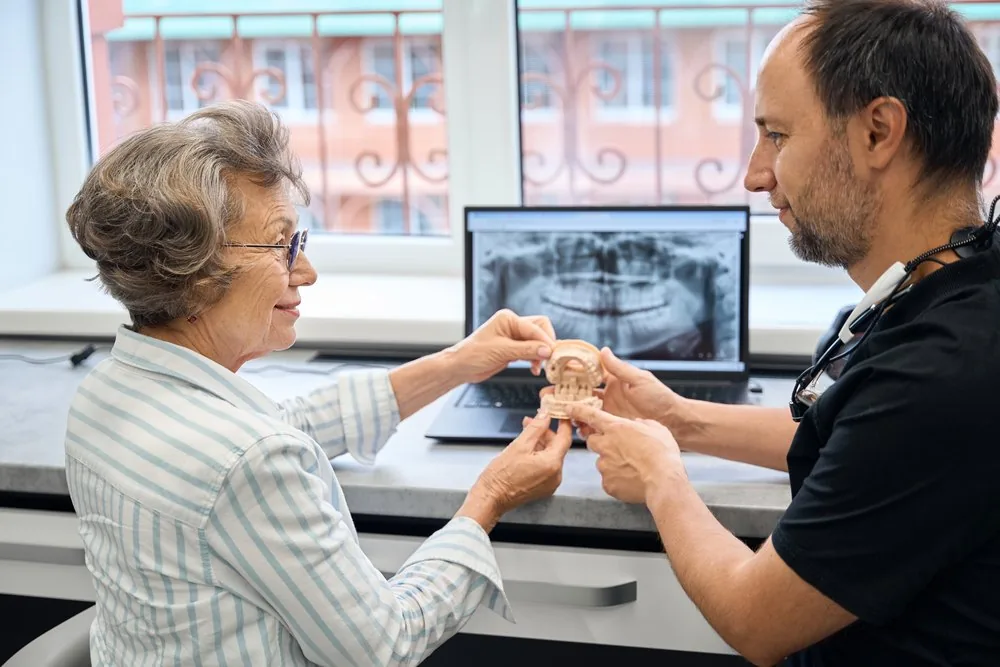
Dentist and senior patient holding a denture together, with a dental X-ray on the laptop, dental prosthesis in Barcelona

Dental prosthesis in Barcelona

A dental prosthesis replaces what is missing, and the first thing to decide is not the material but how it is held in place: fixed, screwed or cemented, or removable, taken out to clean. Here a zirconia or porcelain crown costs 270 euros. What changes over the years on a removable one is not the prosthesis but the gum it rests on.

Clinic specialized in fixed and removable prosthesis

Precision, esthetics and comfort, with the material and the brand written into the quote before anything starts. We specialize in advanced bone and gingival regeneration techniques, and offer immediate load prosthetic solutions, implemented by a team of highly qualified professionals. Come to our dental clinic located in Barcelona for a free evaluation.

What each type of prosthesis costs, from a single crown to a full denture, is listed on the page about dentures cost in Barcelona.

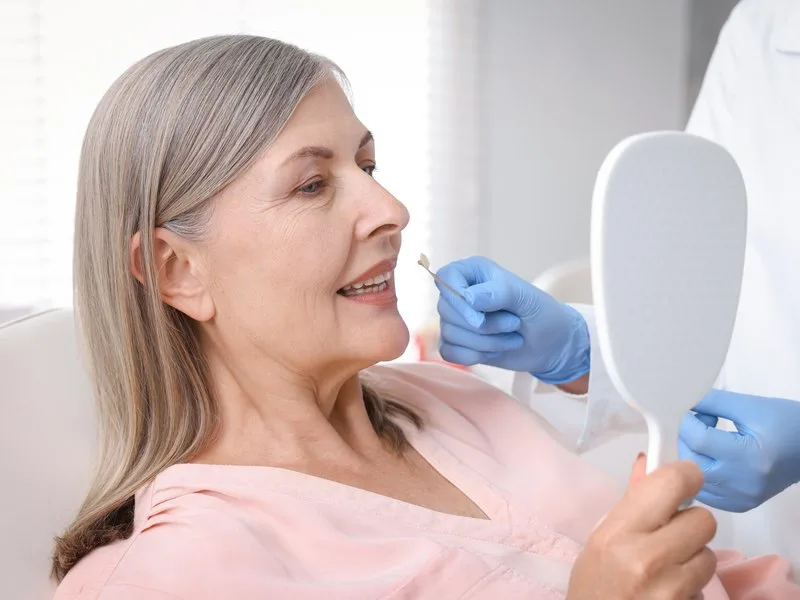
Senior woman checking her prosthetic teeth in a hand mirror while the dentist's gloved hand adjusts them in Barcelona
01

Dental restoration

Recover the functionality and esthetics of your smile, and enjoy life biting and smiling without reserve.

02

Guaranteed longevity

Committed to giving you a lasting and genuine smile, forget about dental problems.

Function restored

They restore chewing efficiency and clear speech, allowing full enjoyment of daily life.

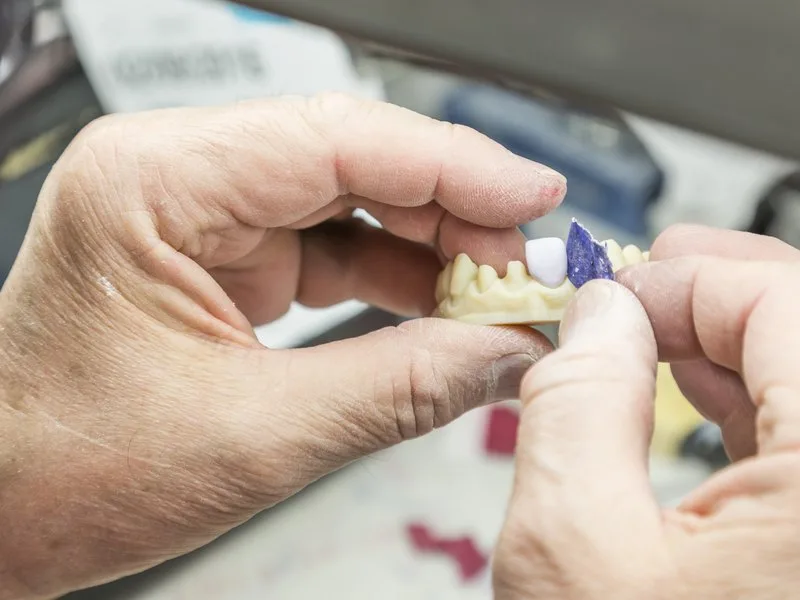
Dental technician's fingers holding a stone model with a ceramic crown, a common dental crown type in Barcelona

Durability

On fixed prostheses, zirconia and porcelain take years of chewing without staining or wearing down the way a resin would. On removable ones, what changes over time is not the prosthesis but the gum it rests on, so it is adjusted every so often rather than remade.

And on both, what really decides how long they last is the check-up: the material does not decay, but the gum and bone holding it are lost if nobody looks at them.

Natural aesthetics

Our dental prostheses provide natural esthetics, so you can keep smiling as always.

Simplified care

Can be integrated into the regular oral hygiene routine, facilitating uncomplicated maintenance.

Which prosthesis is best for me?

Choosing the right dental prosthesis is a crucial step towards regaining a complete and functional smile. In the world of modern dentistry, there are primarily two categories of dentures: fixed and removable.

Each type offers unique advantages and suits different individual needs and preferences. Below, we will explore the distinguishing characteristics of fixed and removable dentures to help you make an informed decision about which is the best option for you.

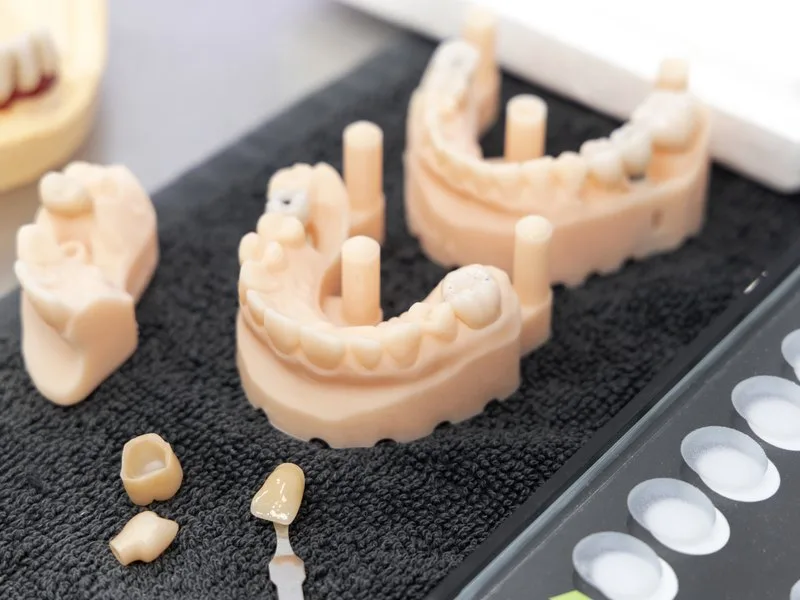
Printed dental models with posts, loose crowns and a shade tab on a lab tray showing dental prosthesis types in Barcelona

Fixed dental prosthesis

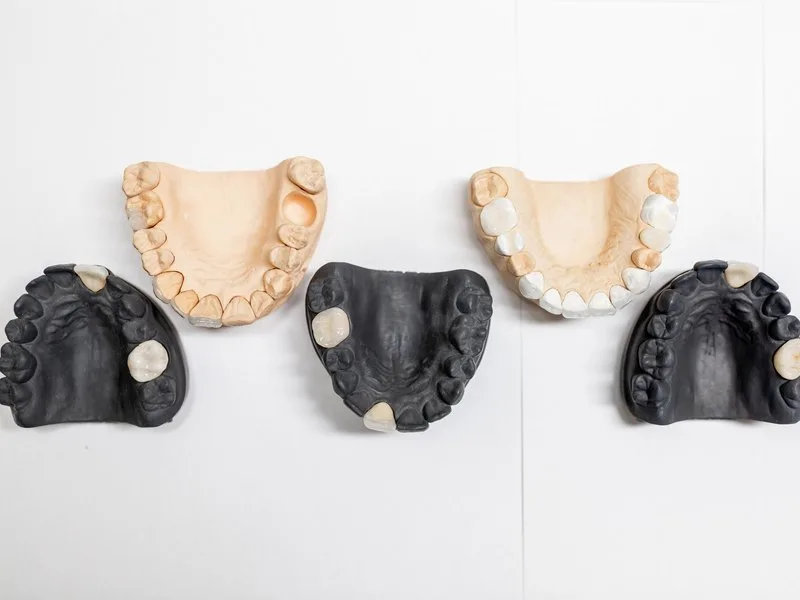
Fixed prostheses, such as dental bridges or implants, are permanently anchored in the mouth, either to adjacent teeth or directly to the jawbone. These prostheses are custom-designed to integrate naturally with the rest of the dentition, offering a durable and stable solution.

Five dental arch models in black and cream with porcelain crowns set in place, samples of a fixed prosthesis in Barcelona

Advantages of a fixed prosthesis

Stability and Comfort: As they are permanently fixed, they do not move or slip, providing a sensation very similar to that of natural teeth.

Improved Functionality: Enables more natural chewing and pronunciation, improving the patient’s quality of life.

Easy Maintenance: They can be cleaned by brushing and flossing, similar to natural teeth.

Durability: With proper care, they can last for many years, even decades.

Considerations for a fixed prosthesis

Cost: Generally, fixed prostheses have a higher initial cost than removable prostheses. Placement Process: May require more visits to the dentist and, in some cases, more complex procedures such as implant placement.

Removable dental prosthesis

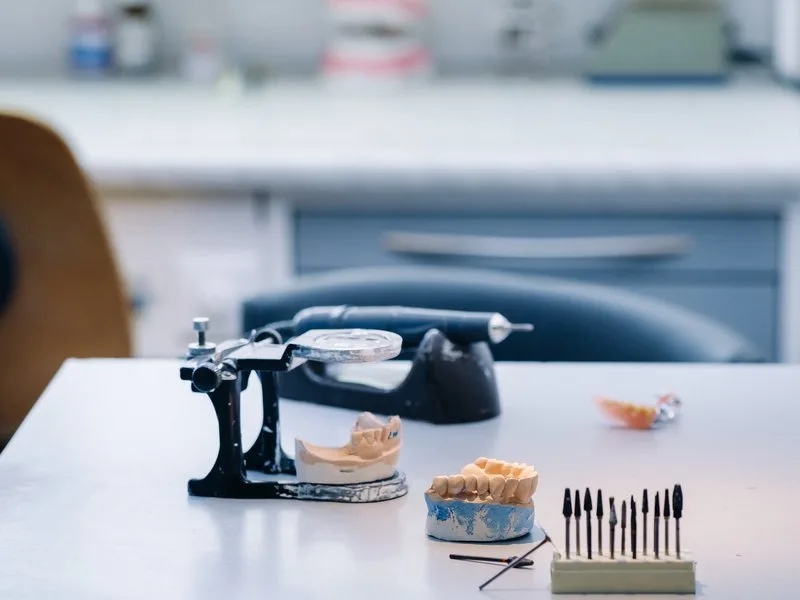
Removable dentures, such as full or partial dentures, can be removed from the mouth for cleaning or overnight. They are designed to fit the patient’s mouth and replace missing teeth by resting on the remaining teeth and/or gums.

Advantages of a removable prosthesis

Flexibility: They can be removed as needed, which facilitates cleaning and maintenance.

Adaptability: They are a practical option for patients who are not candidates for fixed prostheses or implants, either for health reasons, cost or personal preference.

Economical solution: They are generally more affordable than fixed prostheses and can be an effective solution in the short and medium term.

Dental lab bench with an articulator, plaster models, burs and a pink removable dental prosthesis in Barcelona

Considerations for a removable prosthesis

Stability: They may require dental adhesives to improve their stability, but may still move during chewing or speaking.

Care: They need to be removed and cleaned regularly to maintain hygiene and avoid infection.

Adaptation: Some patients may need a period of adaptation to get used to the sensation of the prosthesis in their mouth.

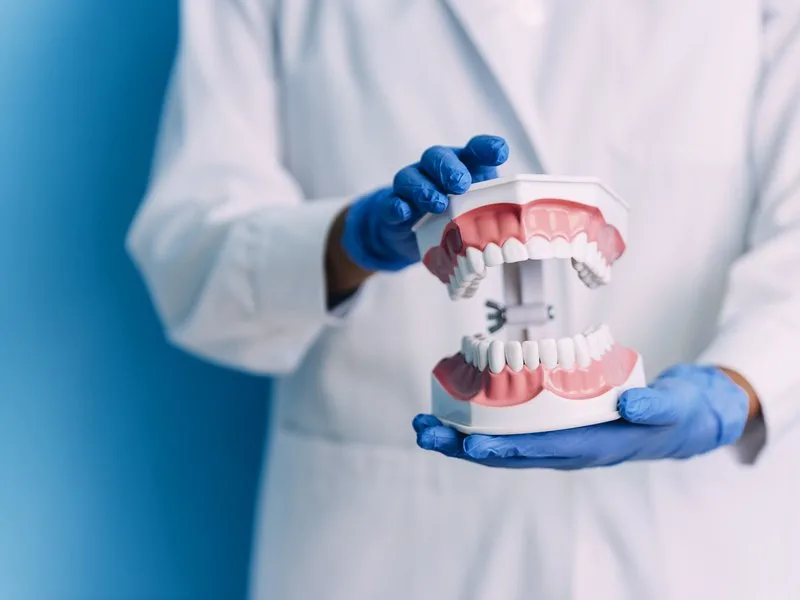
Gloved hands holding a model of both jaws with pink gums to explain what a tooth prosthesis is in Barcelona

What is a dental prosthesis?

A dental prosthesis is a custom-designed solution to replace missing teeth or restore teeth that have suffered significant damage. Its purpose is not only to recover the functionality of the mouth, allowing chewing and speaking correctly, but also to restore the aesthetics of the smile, thus improving the patient’s confidence and quality of life.

Dentures can range from individual replacements, such as a single tooth, to a complete arch, offering customized solutions for each individual’s specific needs. These are fabricated using advanced materials that mimic the look and feel of natural teeth, ensuring a harmonious integration with the existing dentition.

Book your appointment today

01

Free first dental visit

The first one in Barcelona Clinic is 100% free, complete dental study at no cost.

02

Smile design

DSD technology that allows you to see the final result of your treatment before starting the treatment.

03

Conscious sedation

Conscious sedation program is designed to offer you a painless experience.

Frequently asked questions

How long does it take to adapt to a dental prosthesis?

Adaptation time varies according to the individual and the type of prosthesis. Removable dentures may take a few weeks to get used to, while fixed dentures tend to feel more natural more quickly. Follow-up with your dentist is key to adjusting the prosthesis as needed.

Are dentures permanent?

Fixed prostheses, such as implants, are designed to be long-term solutions and can last for many years with proper care. Removable dentures may need to be replaced or readjusted over time due to natural wear and changes in oral structure.

How are dental prostheses cared for?

Fixed prostheses are cared for with good oral hygiene, similar to natural teeth, including regular brushing and flossing. Removable prostheses require removal for daily cleaning with specific products and should not be worn overnight to allow the gums to rest.

Can I eat normally with a dental prosthesis?

Yes, one of the main functions of dentures is to restore the ability to chew effectively. A period of adjustment may be necessary to get used to chewing with the denture, and it is recommended to start with soft foods cut into small pieces.

Can I sleep with my dentures?

It is recommended to remove removable prostheses during the night to allow the gums to rest and promote good oral hygiene. Fixed prostheses, such as implants, are not removed.

What should I do if my denture breaks or is damaged?

In case of breakage or damage, it is important not to attempt to repair it on your own. Contact your dentist as soon as possible to avoid further damage and schedule a professional repair.

Dental prosthesis in Barcelona: fixed and removable