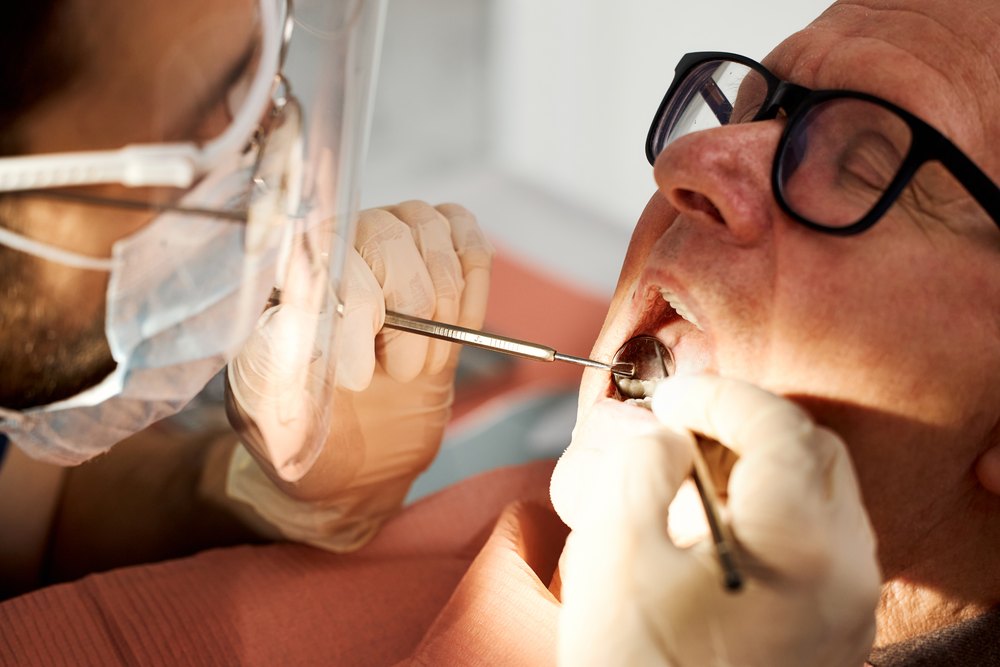
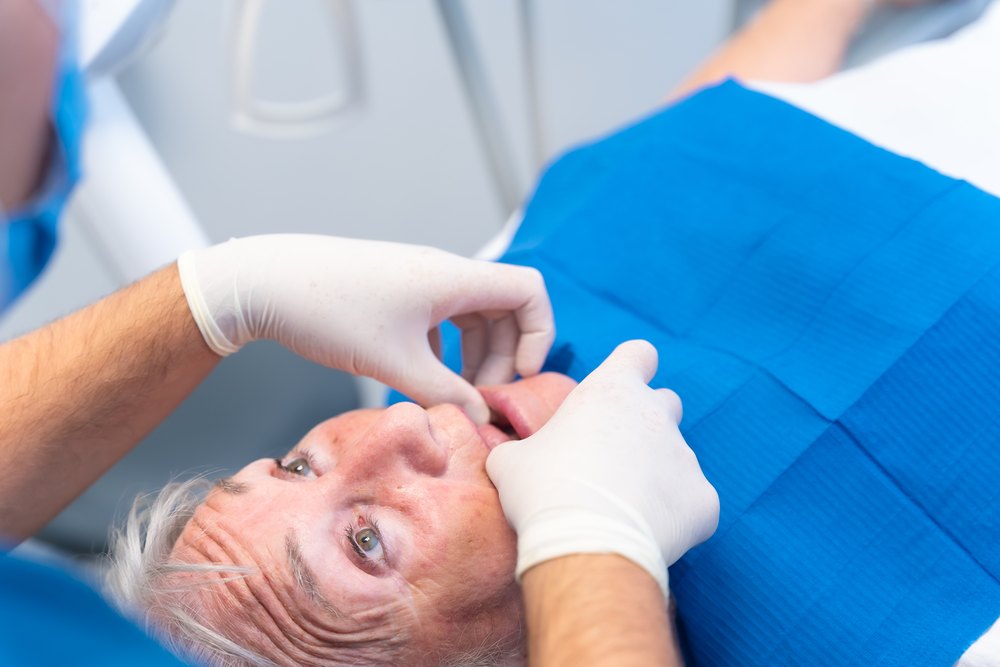
Gum check-up with a mirror and probe

Periodontists in Barcelona

Periodontics treats what holds the tooth in place, which is the gum and the bone, and it is not a cosmetic speciality: it is the one that decides whether your teeth are still there in ten years. The first visit includes a periodontal chart, probing six points on every tooth and recording the depth of each. That map is what decides the treatment.

Symptoms of periodontal disease

These are the signs, ordered from the earliest to the latest. The first ones get mistaken for normal; the last ones already mean bone has been lost: Bleeding when brushing or flossing. It is the first sign and the most ignored. A healthy gum does not bleed, not even if you brush hard. Pain and tenderness in the gums.

Periodontal pockets: the groove between gum and tooth gets deep and collects bacteria where the brush does not reach. This is only seen by probing. Bad breath that comes back within a few hours of brushing, and a bad taste in the mouth. Teeth that move or that have drifted apart, and a bite that has changed without you doing anything.

And a warning almost nobody gives: an implant is lost to this too. It is called peri-implantitis and it is the same disease around the implant. Retraction of the gums, which may expose more of the root of the teeth. Progressive loss of the alveolar bone that supports the teeth. Committed dental esthetics.

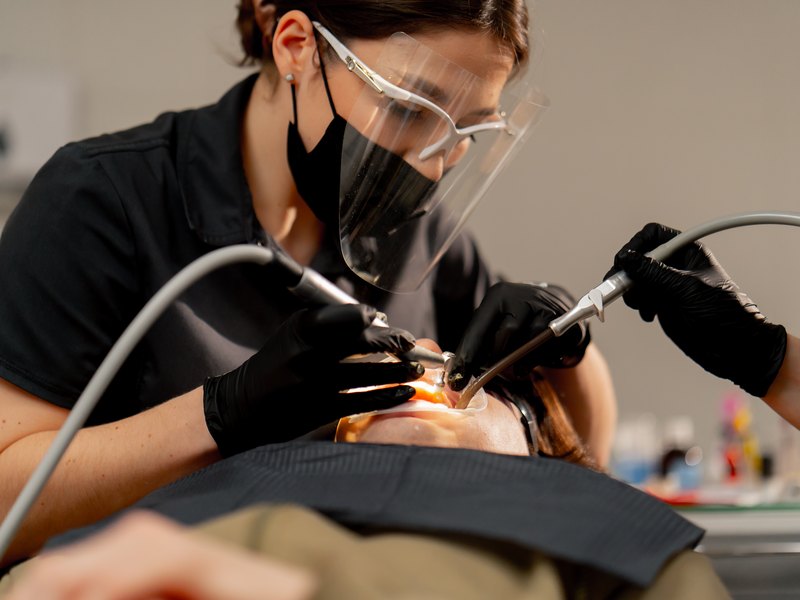
Dental hygienist or dentist working on a patient in the chair, with eye protection

Periodontal treatments we offer

From a cleaning above the gum line to surgery, in the order the disease calls for, with a review after each phase.

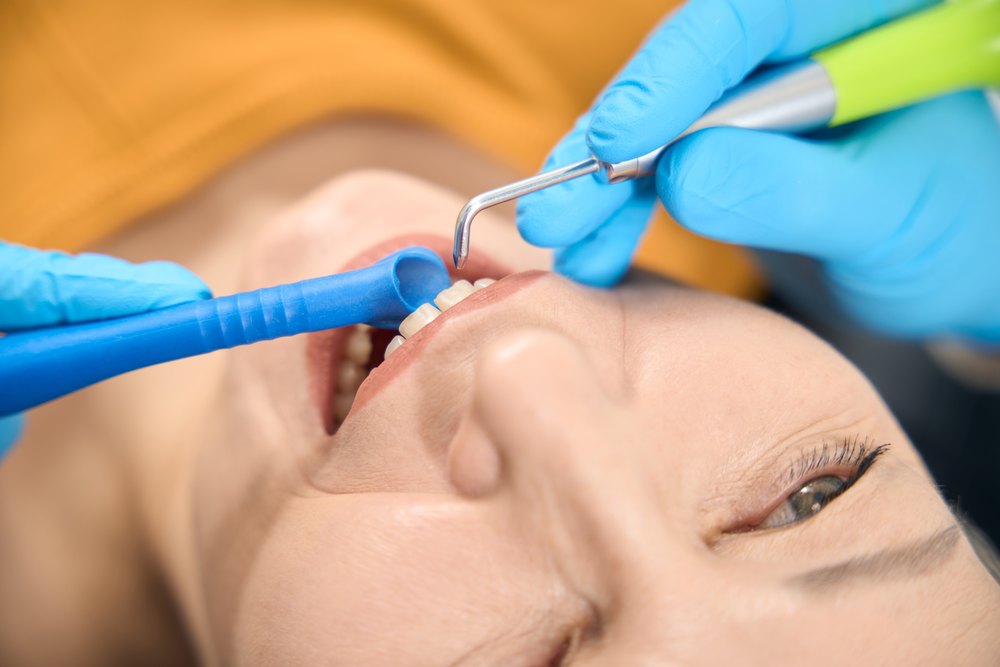
Patient during a professional dental cleaning with an ultrasonic scaler and suction

Oral cleaning: prophylaxis

First what can be seen is removed: plaque and tartar above the gum line, with ultrasonics, prophylaxis cups with polishing paste and topical fluoride. On its own this does not cure periodontitis, because the problem is underneath; it is the preparation for the step that does treat it.

Dental curettage: scaling and root planing

Scaling and root planing is the treatment that actually works: with curettes the root is cleaned below the gum line, which is where the bacteria that destroys the bone lives, and the surface is left smooth so the gum can reattach to the tooth and the pocket closes. It is done under anaesthesia and by quadrants.

What each phase costs, from the free periodontal exam to scaling and root planing at 60 €, is broken down on the page about gum disease treatment cost in Barcelona.

A patient's gums being checked before scaling and root planing

Periodontal surgery

It involves different techniques, such as removal of infected or damaged tissue, bone regeneration or improving esthetics. It includes gingivectomy, gingival grafting and crown lengthening.

Periodontal treatment protocol

Periodontitis is stopped and controlled; bone that has already been lost does not come back on its own. We prefer to say so up front: the aim is to stop the disease and keep the teeth, not to promise that everything returns to where it started. Our protocol has four steps:

01

Periodontal study and oral cleaning

Includes X-rays, probing, microbiological and genetic study.

02

Scaling and root planing

Deep cleaning with EMS Air Flow anesthesia and fluoridation.

03

Periodontal review

Free revision 1 month later: Maintenance or surgery is considered.

04

Maintenance phase

Maintenance appointments, where the above steps will be repeated.

Book your appointment today

01

Free first dental visit

The first one in Barcelona Clinic is 100% free, complete dental study at no cost.

02

Smile design

DSD technology that allows you to see the final result of your treatment before starting the treatment.

03

Conscious sedation

Conscious sedation program is designed to offer you a painless experience.

Hand holding a soft-bristled toothbrush

Tips for good brushing technique

At Barcelona Dental Clinic, in addition to the periodontal treatment protocol described above, we also promote and teach proper oral hygiene techniques to help our patients control the disease and maintain good long-term periodontal health. These techniques include:

  • Brushing with an electric toothbrush, resting at a 45 degree angle between the tooth and gum to remove subgingival plaque with gentle pressure.
  • Use of interdental brushes to clean plaque between the teeth, using different diameters according to the patient’s needs.
  • Tongue sweeping with a tongue cleaner to remove bacteria and plaque accumulated on the tongue.
  • Use of a specific mouthwash prescribed by the periodontist to complement the treatment and help prevent the accumulation of plaque and bacteria.

It is important to point out that the patient’s collaboration and commitment are fundamental to achieve control and maintain good periodontal health in the long term. For this reason, adequate education and follow-up on oral hygiene techniques will be carried out, because the success of the treatment depends on it.

Frequently asked questions

What is periodontics?

Periodontics is a specialty of dentistry dedicated to the study, diagnosis, treatment and prevention of periodontal diseases, such as gingivitis, periodontitis and pyorrhea. These diseases affect the gums and supporting tissues of the teeth, and can lead to problems such as tooth loss if not treated in time.

Many people over the age of 30 have some form of periodontal disease and may not be aware of it. Our team of periodontists is highly trained and dedicated to effectively treat these diseases and help reduce them as much as possible.

In addition, periodontics is essential for dental health by maintaining daily oral hygiene habits and visiting the dentist at least twice a year to check the condition of the gums and detect problems early. This will help ensure that the foundation of the teeth, i.e. the gums, are in optimal condition to support the teeth for many years to come.

Why Clínica Dental Barcelona?

In periodontics what makes the difference is not the equipment, it is measuring. Every first visit includes a periodontal chart: six points are probed on each tooth and the depth of every one is recorded. That is more than 150 measurements, and it is the only thing that tells gingivitis from periodontitis and what lets us compare in six months whether the treatment is working.

Without that record, a periodontal check-up is an opinion. With it, the next visit can say in numbers whether the pocket on a particular tooth has closed. The microbiological study is added when the progress does not match what was expected, because it says which bacteria are there and therefore whether an antibiotic is worth using or not. We are located in Barcelona.

What causes the onset of periodontal diseases?

Periodontal diseases are mainly caused by the accumulation of bacterial plaque and tartar in the mouth. Bacterial plaque is an invisible film of microorganisms that accumulates on the teeth and gums, and if not properly removed, can turn into tartar and cause gum disease.

Gingivitis is the initial stage of periodontal diseases, in this stage gum inflammation occurs without bone loss. The symptoms of gingivitis are swollen and bleeding gums, halitosis and bad mouthfeel. Although it is a treatable disease if detected early, it is important to prevent it with good hygiene habits and regular visits to the dentist.

Periodontitis is the second stage of periodontal disease, characterized by chronic inflammation of the gums and the proliferation of pathogenic bacteria. At this stage, irreversible loss of supporting tissues (bone and gum) is already present. The treatment of periodontitis is essential to save the affected teeth.

Periodontics in Barcelona: gingivitis and periodontitis