Periodontal surgery in Barcelona
Periodontal surgery comes in when scaling below the gum can no longer reach: deep pockets, receded gum leaving the root exposed, or lost bone that can be regenerated. Here we perform gingivectomy, gum grafting and crown lengthening, always under local anaesthetic and after the infection has been treated.
Mucogingival surgery
Periodontal disease is a bacterial problem that attacks the supporting tissues of the teeth. If left untreated, it can lead to the loss of affected teeth. At Barcelona Dental Clinic, we often receive patients with advanced periodontal disease. After the basic scaling and root planing treatment, we re-evaluate them and determine if they need periodontal surgery to completely resolve their problem or move to a periodic maintenance phase.
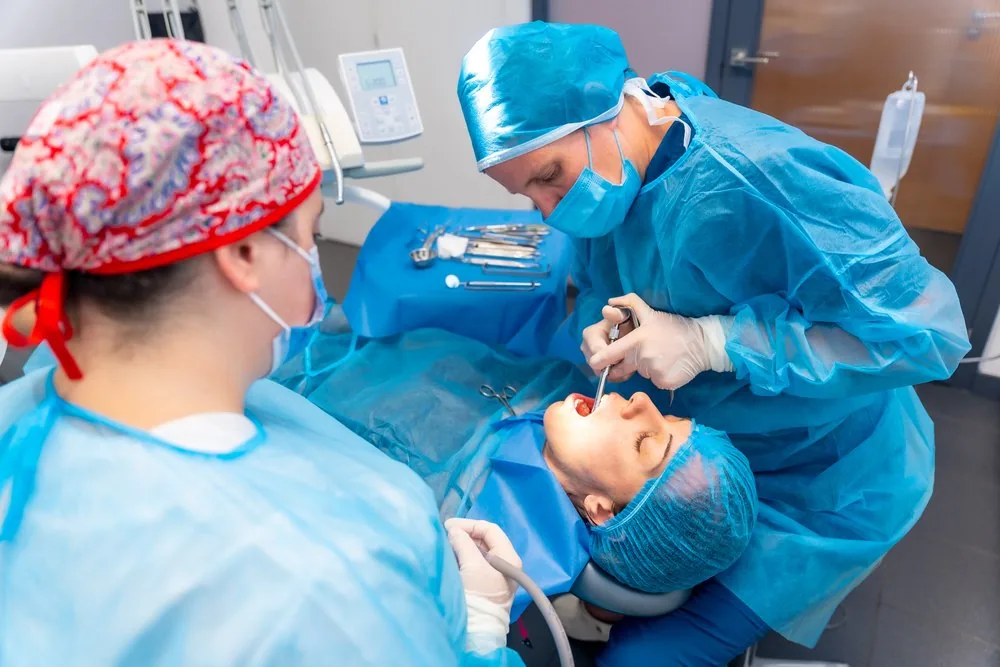
If surgery is necessary, we arrange sextant appointments, where we will perform the surgery under local anesthesia or, if desired, we offer a conscious sedation program to perform the treatment without pain. The surgery consists of accessing the deep pockets by elevating a small flap and removing the calculus, providing adequate bone anatomy and suturing the flap.
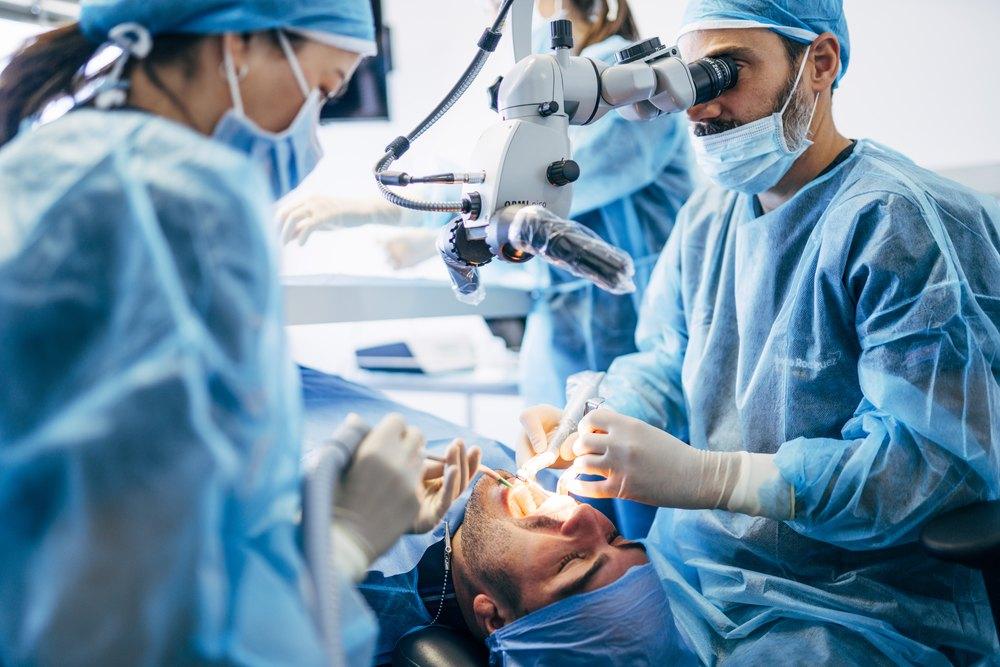
In many cases, the patient does not need antibiotics, only anti-inflammatories and analgesics. One week later, the patient returns to have the stitches removed. As it is a minimally invasive procedure performed with visual magnification, the postoperative period is well tolerated by our patients.
Periodontal surgery: postoperative period
After an intervention performed by our Periodontics team it is important to follow the specific indications provided for each patient. Some general recommendations include the use of chlorhexidine rinse for several weeks, the possible need for medication to relieve pain or inflammation, and the doctor’s supervision to determine when sutures should be removed.
It is also recommended to use a surgical toothbrush and avoid brushing the operated area, as well as periodic check-ups to prevent recurrence of periodontal disease.
Periodontal surgery services
These are three different procedures, and each one corrects one thing: a gingivectomy removes excess gum, a graft replaces gum where it is missing, and crown lengthening leaves more tooth showing, to hold a crown or even out the smile.
What each one costs, with the gingivectomy at 30 € per tooth and the rest quoted by area, is broken down on the page about gum surgery cost in Barcelona.
Gingivectomy
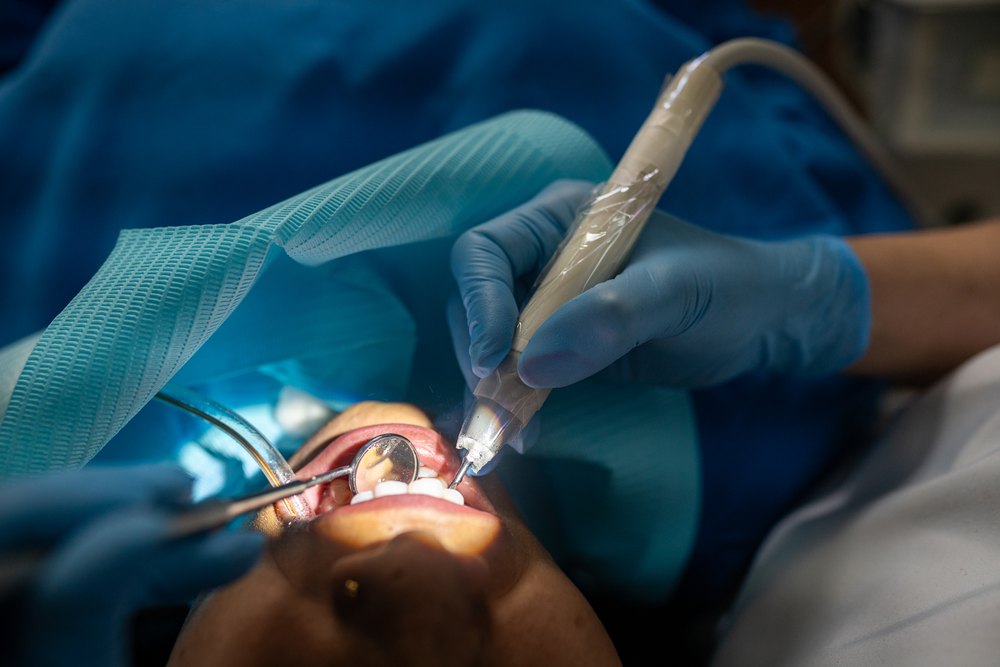
It trims the excess gum covering the tooth, which makes the tooth look shorter than it is. It is considered when your smile shows more gum than tooth, or when the gum has grown over the crown. It is reshaped under local anaesthetic and heals in a few days.
Gum graft
It replaces gum where it has receded and left the root exposed. The exposed root is covered with tissue from your own palate or with a substitute. It resolves the cold sensitivity in that area and stops the recession going further.
Crown lengthening
It lowers the level of the gum, and of the bone if needed, to leave more tooth showing. It is done when too little healthy tooth is left above the gum to hold a crown, or to even out the height of the teeth when you smile. Under local anaesthetic.
Periodontitis and dental esthetics
At Barcelona Dental Clinic, we are specialists in treating periodontitis and its impact on dental esthetics. Periodontitis is an inflammatory disease that affects the gums and supporting tissues of the teeth, and if not treated in time, can lead to tooth loss and cosmetic problems.
Common cosmetic problems that can occur in patients with periodontitis include interdental spaces, changes in tooth position and an overall unpleasant appearance. At the Barcelona Dental Clinic, we offer combined periodontal and cosmetic dentistry treatments to treat these aesthetic problems. Our team of professionals uses root resurfacing techniques, gum grafts and porcelain dental veneers to restore the patient’s lost esthetics.
In addition, in specific cases, we also provide orthodontic treatments with clear aligners to further enhance the aesthetic results. It is essential that before beginning any esthetic treatment, periodontal disease is fully controlled. At the Barcelona Dental Clinic, we are committed to providing high quality service and personalized attention to each patient.
We work closely with each patient to ensure they get the best possible results. In addition, we offer regular check-ups to maintain periodontal health and prevent recurrence of the disease. If you are concerned about cosmetic problems caused by periodontitis, do not hesitate to contact us to schedule a consultation.
How do I know if I have periodontitis?
In order to know if a patient has periodontal disease, it is necessary to be examined by a periodontist who is a specialist in the field. At this appointment, the physician will perform a probing test to evaluate the health of the gums, and with appropriate x-rays, will be able to determine the extent of the disease.
With the results of these tests, the periodontist can assess the degree of gum involvement and the bone loss supported by each tooth. The deeper the pockets, the greater the bone loss. The treatment of periodontal disease may require, in addition to scaling, a periodontal surgery phase.
How to prevent periodontal diseases?
At Barcelona Dental Clinic, we are committed to the prevention of periodontal diseases through good oral hygiene. The best way to avoid periodontal problems is to maintain a daily routine of proper dental cleaning, including brushing and flossing. In addition, it is advisable to schedule regular check-ups with our dental team to detect and treat any problems early.
If you detect symptoms of gingivitis, such as swollen gums, bleeding when brushing your teeth or bad breath, it is important to take extreme hygiene measures and schedule a consultation with our team of specialists. Gingivitis is an inflammatory disease that affects the gums and if not treated in time, it can evolve into periodontitis.
At Barcelona Dental Clinic, we offer specific treatments to treat gingivitis and prevent its evolution to periodontitis. Our team of dental specialists will work with you to develop a personalized treatment plan to keep your gums healthy and prevent future problems.
Frequently asked questions
When is surgery needed rather than scaling?
When the pockets are still deep after scaling, when the gum has receded and left the root exposed, or when there is lost bone that can be regenerated. That is decided by the periodontal chart at the check-up, not by impression.
Does periodontal surgery hurt?
It is done under local anaesthetic, so you feel no pain during the procedure. Afterwards there is discomfort and swelling for a few days, managed with the instructions you are given in writing when you leave.
Does lost bone come back?
Some of it does, with regeneration techniques, and it depends on the shape of the defect. What cannot be promised is that gum and bone return to where they were: the aim is to stop the disease and keep the teeth.
You may also be interested in
