

Porcelain dental veneers in Barcelona
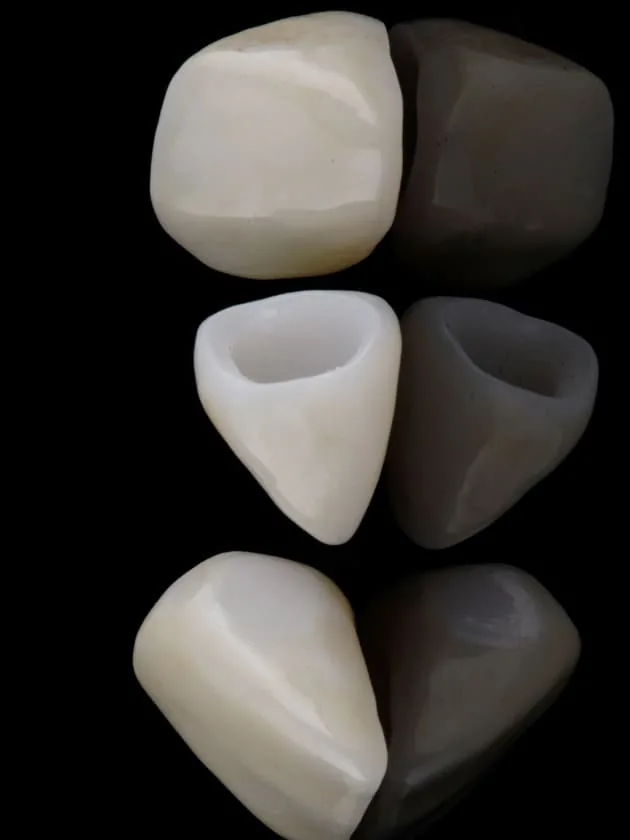
A porcelain veneer is a ceramic layer bonded to the visible face of the tooth, changing its colour and its shape. Here it costs 320 euros per tooth and it is made in a laboratory on a model of your mouth, so colour and texture are worked tooth by tooth. Its glazed surface does not take up staining.
Porcelain dental veneers
Porcelain Dental Veneers in Barcelona
At Barcelona Dental Clinic we specialize in transforming smiles with the latest technologies in cosmetic dentistry. One of the treatments we offer is porcelain dental veneers, an option for those who want to change the color or shape of their teeth.
What are porcelain dental veneers?
Porcelain veneers are thin shells that are bonded to the front surface of the teeth. These veneers are custom designed for each patient, ensuring a perfect fit and a natural look. They are an excellent solution for correcting aesthetic problems such as discolored, broken, misaligned or gapped teeth.
Advantages of porcelain veneers
At Barcelona Dental Clinic, we understand the importance of an aesthetically pleasing and functional smile. Porcelain veneers are an excellent solution to numerous dental challenges, offering a wide range of benefits:
Dental Enamel Simulation: Porcelain veneers mimic natural tooth enamel, providing an authentic look and feel.
Color Customization: They can be customized to match the color of your natural teeth or to achieve a whiter, brighter shade, according to your preference.
Resilient Material: Porcelain is an extremely tough and durable material, capable of resisting wear and stains.
Non-Porous Surface: Unlike natural teeth, porcelain does not absorb pigments easily, which makes veneers more resistant to stains from food and beverages.
Less Tooth Than a Crown: Only the visible face is reduced, not the whole tooth, and wherever possible without going past the enamel. The enamel almost always has to be prepared, though, so this is not a reversible treatment.
Extended Life Span: Porcelain veneers have been followed in clinical studies for up to twenty years.
Gum-friendly: Porcelain is well tolerated by gingival tissue, reducing the risk of irritation or adverse reactions.
Types of porcelain dental veneers
Porcelain dental veneers are a popular solution for improving dental esthetics. They offer a natural and resistant appearance, being an ideal option for those who are looking to renew their smile. There are 2 types of porcelain dental veneers:
Disilicate Dental Veneers. Lithium disilicate veneers are known for their strength and durability. This type of veneer is fabricated from a very strong ceramic material, making them ideal for cases where greater chewing strength is required or for teeth that have been weakened. The main characteristics of disilicate veneers are:
Durability: Designed to have a long service life by resisting fracture and wear.
Improved esthetics: They offer a translucency similar to that of natural teeth, which makes them truly esthetic.
Customization: Being manufactured in layers allows for a customized and detailed design.
Feldspathic Dental Veneers. Feldspathic veneers, on the other hand, are known for their excellent esthetics. These veneers are made of feldspathic porcelain, a material that offers a translucency and luster similar to natural teeth. They are ideal for patients seeking aesthetic enhancement with a very natural look. The main characteristics of feldspathic veneers are:
Thinner: Compared to other types of veneers, which requires less preparation of the tooth.
Customization: They adapt perfectly to the color and texture of the tooth as they mimic the color and texture of natural teeth.
Ideal for cosmetic treatments: where the focus is on improving the front appearance of the teeth: as in the case of discolored or slightly misaligned teeth.
Choosing the right type of dental veneers for you is an important decision. For this reason, we offer all our new patients a free initial visit. During this consultation, our team of experts will carry out a detailed study of your case and will advise you on the dental veneer option that best suits your needs and expectations.
Placement of porcelain dental veneers step by step
The protocol for designing porcelain veneers includes a photographic and video study of the patient’s face, lips, smile and teeth. This information is processed in a digital smile design program, which makes it possible to create a personalized smile for each patient.
Once the digital design has been finalized, it is tried in the patient’s mouth so that they can evaluate and decide if they like it. The patient can also collaborate in the design of his or her new smile, suggesting changes or corrections. This process is reversible and does not involve making changes to the teeth until the patient is satisfied with the design.
Once the approval is given, the porcelain veneers are fabricated and bonded to the tooth surface. With this treatment, the patient’s smile will be rejuvenated and will have a more natural and healthy appearance. Before they are made, the enamel is prepared under local anesthesia, and what is removed does not grow back, so the treatment is not reversible.
When are porcelain dental veneers recommended?
Interdental spaces or diastemas: If the teeth are separated and there is a space between them (diastema), veneers can be a good solution. However, it is important to make sure that orthodontics is not a more appropriate option or that orthodontic treatment is not needed before veneers are applied.
Tooth staining: if teeth have stains or discolorations, either intrinsic or extrinsic, and they have not been resolved or met the patient’s expectations with a previous whitening treatment, veneers may be an appropriate solution. Small tooth size: Over time, teeth can become shorter and worn down.
Dental veneers can help restore the shape and texture of teeth, giving a more youthful appearance to the smile. Unattractive smiles: in cases where you feel that something about your smile is not right or you simply want to improve it, dental veneers can be a good option.
Price of porcelain veneers
We understand that economics is an important consideration for our patients in Barcelona. Therefore, we want to be transparent and provide all the necessary information so that you can make an informed decision. The price of each porcelain dental veneer, both lithium disilicate and feldspathic in our clinic is 320 €.
Will veneers damage my natural teeth?
Only a thin layer of enamel is taken off, and sometimes none, but enamel that is removed does not come back. A well-bonded veneer with regular check-ups does not harm the tooth underneath, and the edge is what needs watching, because decay can start there if hygiene slips.
Is the process painful?
At Barcelona Dental Clinic, we make sure that the process is as comfortable as possible. The enamel is prepared under local anesthesia, and after each appointment you can go on with your day.
Frequently asked questions
Do veneers damage my natural teeth?
A thin layer of enamel is removed, and in some cases none, but what is removed does not grow back. How much enamel your tooth loses depends on the thickness the veneer needs, and that is decided at the study, with the photographs and the design in front of you, not in the chair.
Is the process painful?
It usually is not. The enamel is prepared under local anesthesia. Between the preparation and the final veneer you wear temporaries, so you are never without teeth.
How long does a porcelain veneer last?
A long time with good care. In a University of Innsbruck follow-up of 318 ceramic veneers, 93.5% were still in place at ten years and 82.9% at twenty. Its glazed surface does not take up staining, so after ten years the colour is the colour of the first day. What does put it at risk is bruxism without a guard, and biting hard things.
How much does a porcelain veneer cost in Barcelona?
320 euros per tooth, a closed and published price, with the study and the digital design included. The first assessment visit is free. What each tooth includes and what is charged separately are broken down on the page about porcelain veneers cost in Barcelona.
You may also be interested in
