
Metal braces in Barcelona
Metal braces are the classic orthodontic appliance: small stainless steel pieces bonded to the outer face of each tooth and linked by an archwire. The wire does the work, slowly returning to its own shape and carrying every tooth along with it.
They are still the most widely used system, for two concrete reasons. They last: steel does not stain and does not come unstuck, so a two-year treatment runs without surprises. And they move teeth in any direction, including the difficult cases where the more discreet alternatives fall short or stretch the timeline.
The trade-off is that they show, and that is worth saying up front. If that is your only reservation, at our Barcelona clinic we will show you at the first appointment how ceramic braces or clear aligners would look on your own teeth, with the timeline and the cost of each, so you can choose knowing what you gain and what you give up.
How metal braces are fitted, step by step
Fitting them is painless and needs no anaesthetic. What it does take is chair time, so it helps to know how the day goes.
Assessment first. X-ray, photographs and an impression or scan of your mouth. That shows where each tooth has to travel and how long it will take. The plan and the fixed quote come out of that, before anything is touched.
Getting the mouth ready. Decay, tartar or inflamed gums are dealt with first. A bracket bonded onto a tooth in poor condition causes trouble later, and cleaning around wires is harder than cleaning a free tooth.
Fitting. The tooth surface is dried, each bracket is bonded in its exact position and the first archwire goes in, always the most flexible one. Between one hour and an hour and a half, and you leave with the braces on.
Adjustments. Every four to six weeks the wire is swapped for a slightly firmer one. These are short visits, fifteen or twenty minutes, and they set the real pace of the treatment.
Removal and retention. When the braces come off the enamel is polished and the retainer goes in: a fine wire behind the teeth, a clear retainer worn at night, or both. This part is not optional, and further down we explain why.
For the first three or four days you will feel pressure when you bite and some rubbing on the inside of the cheek. Orthodontic wax and soft food handle it, and it passes on its own.
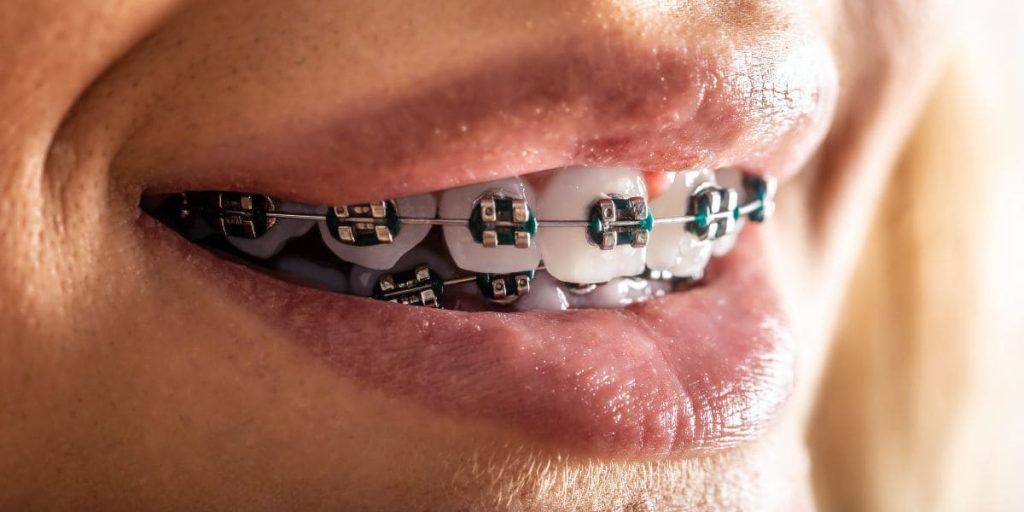
Why choose metal braces
They handle everything. Severe crowding, crossbites, rotated teeth or teeth that never came through: a metal bracket controls movement tooth by tooth, even when one has to be brought a long way.
They do not depend on you remembering. They are bonded on, so they work twenty-four hours a day. With clear aligners the timeline depends on wearing them the agreed number of hours, and that is where treatments stretch.
They are the most affordable fixed orthodontics. They cost less than ceramic braces, lingual braces and clear aligners. The quote is fixed at the first appointment and the adjustment visits are included.
They last. Steel does not break and does not change colour. If one comes unstuck it is bonded again in a short visit and treatment carries on unchanged.
Drawbacks of metal braces
They show when you talk and in photographs. That is why many people ask about ceramic braces or clear aligners first.
The first days are uncomfortable. Pressure when biting and rubbing against the inside of the lip. Wax and soft food see you through three or four days, and after each adjustment it comes back for a day, much milder.
They take more cleaning. You have to brush around every bracket and use an interdental brush, especially along the gum line. Neglecting it leaves white marks on the enamel that do not go away when the braces come off.
Some foods have to go. Ice, whole nuts, very crusty bread and anything sticky pull brackets off easily.
Frequently Asked Questions
Fitting them does not hurt: nothing is done inside the tooth and no anaesthetic is needed. What does turn up comes afterwards, once the archwire starts working. Between six and forty-eight hours later your teeth will feel tender when you bite, as though they were slightly loose, and that lasts three or four days.
Soft food for those days and orthodontic wax on any point that rubs the cheek, which we give you at the appointment, deal with it comfortably. If you need a painkiller, take the one you already use for a headache, unless your doctor has told you otherwise. After each adjustment visit you will feel something similar for a day, and much milder.
It depends on how far the teeth have to move and on your age, so the real timeline comes out of the initial assessment, not from an average. As a guide: mild crowding is usually resolved in twelve to eighteen months, and a case with an altered bite or teeth that have to be brought a long way can run to two years or a little more.
What does shorten it is not missing adjustment visits. Each one swaps the wire for a firmer one, and a skipped appointment does not cost a month, it costs that month plus the one spent getting back to where the movement was. At the first appointment we give you the estimated timeline for your case in writing, along with the quote.
Yes, if no retainer is worn. Teeth tend to drift back towards where they were, especially during the first year, and that is not a failure of the treatment: it is how the fibres holding them to the bone behave, and they need time to settle into the new position.
That is why the retainer goes in the day the braces come off, and it is part of the treatment, not an extra. It is usually a fine wire bonded behind the lower teeth, which cannot be seen or felt, plus a clear retainer worn at night. The wire is checked once a year; the clear retainer is worn every night at first and then spaced out. People who stick with retention keep the result; the ones who abandon it in the first year are the ones who come back years later with crowded teeth again.
Ask for a Free Quote: