
Lingual braces in Barcelona
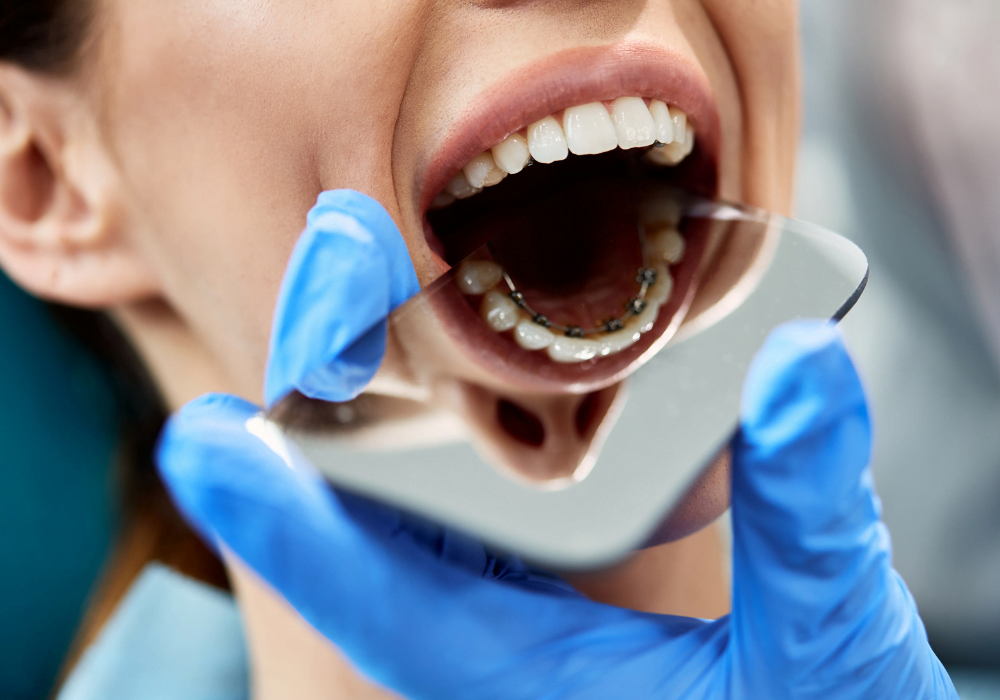
Lingual braces sit on the inner face of the teeth, the side facing the tongue. From the outside there is nothing to see: you can spend two years in treatment without it showing when you speak, when you laugh or in a photograph.
They are not ordinary braces turned around. Each bracket is manufactured for your own tooth from a scan of your mouth, because the inner surfaces differ enormously from one tooth to the next and an off-the-shelf piece would not seat properly. That custom manufacture explains the two things that characterise this treatment: it costs more than any other fixed appliance, and several weeks pass between the scan and the fitting appointment.
It is the option for someone who does not want the treatment to show and would rather not depend on remembering to put aligners back in. At our Barcelona clinic we tell you at the first appointment whether your case can be treated from the inside, and when it cannot, which discreet alternative does solve it.
How lingual braces are fitted
It is two appointments a few weeks apart, with the laboratory building your pieces in between. This is how it goes.
Assessment and scan. X-ray, photographs and an intraoral scan. That decides whether your case can be treated from the inside, plans the movement tooth by tooth, and produces the fixed quote.
Custom manufacture. Your brackets and archwires are designed on that scan, one by one, for the inner face of each tooth. This wait is the one conventional braces do not have, so count it in if you have a date in mind.
Fitting. They are bonded all at once using a tray made for your mouth, so each bracket lands on the exact spot that was planned. It is the longest appointment of the treatment.
Getting used to them. For the first weeks the tongue rubs and you will lisp slightly. It passes, and orthodontic wax on the points that bother you plus reading aloud for a while each day both help.
Adjustments and retention. The archwire is adjusted every four to six weeks. When the braces come off the retainer goes in, which is what stops the teeth drifting back, and it is not optional.
Cleaning is explained on fitting day, because the inner face is harder to see and harder to reach: an interdental brush and a water flosser stop being optional extras.
What you gain with lingual braces
They genuinely cannot be seen. They sit on the inside, so they do not show when you speak or in photographs. They are the only truly invisible fixed appliance: ceramic braces are discreet, but they are visible.
They do not depend on you remembering. They are bonded on and work twenty-four hours a day, without the daily wear time clear aligners demand.
They are built for your mouth. Each piece is designed on a scan of your own teeth rather than picked from a range, which allows the movement to be planned very precisely.
They do not rub the lip. Any rubbing happens on the tongue rather than outside, so they do not mark the inner face of the lip the way conventional brackets do.
What to know before you decide
They cost more. They are the most expensive fixed appliance, because every piece is manufactured for you and the fitting takes longer. The figure for your case comes out of the assessment, as a fixed quote before anything starts.
Your tongue has to adapt. For the first weeks you will feel rubbing and speak with a slight lisp. It passes, but it is more uncomfortable at the start than braces on the outside, and that is worth knowing beforehand.
They take more cleaning. The inner face is harder to see and harder to reach with a brush, so you have to be consistent with interdental cleaning.
They do not suit every case. If the lower teeth are very short there is not enough inner surface to bond to, and some very deep bites knock the brackets off. That shows up in the assessment, before you commit.
They do not start on the day. Between the scan and the fitting sit the weeks the laboratory needs to build your pieces.
Frequently Asked Questions
Bonding them does not hurt and no anaesthetic is needed. What you will notice is your tongue: for the first days it rubs against the brackets and bothers you when you speak and swallow, while at the same time your teeth feel tender when you bite, because the archwire has already started working.
The tongue is what sets this apart from braces on the outside, and it is handled with wax on the points that rub plus a little patience: within a week or two the tongue has adapted and you stop noticing. The lisp of those first days goes too, and reading aloud for a while each day speeds it up.
The same as braces on the outside, and it is your case that decides it, not the technique: twelve to eighteen months for mild crowding, two years or a little more if the bite has to be corrected as well. That timeline comes out of the assessment, not from an average.
What lingual braces do add are the manufacturing weeks between the scan and the fitting appointment, because your brackets do not exist until they are made. If you have a date in mind, count those in too.
Yes, if no retainer is worn, and it works exactly as it does with any other orthodontic treatment: the appliance places the teeth and the retainer is what keeps them there.
When the braces come off, a fine wire is bonded behind the teeth, which in your case is familiar ground, since that is precisely where you have been wearing the appliance, plus a clear retainer for the night. The first year carries the highest risk of the teeth moving, so that is when sticking to it matters most.
Ask for a Free Quote: