
Ceramic braces in Barcelona
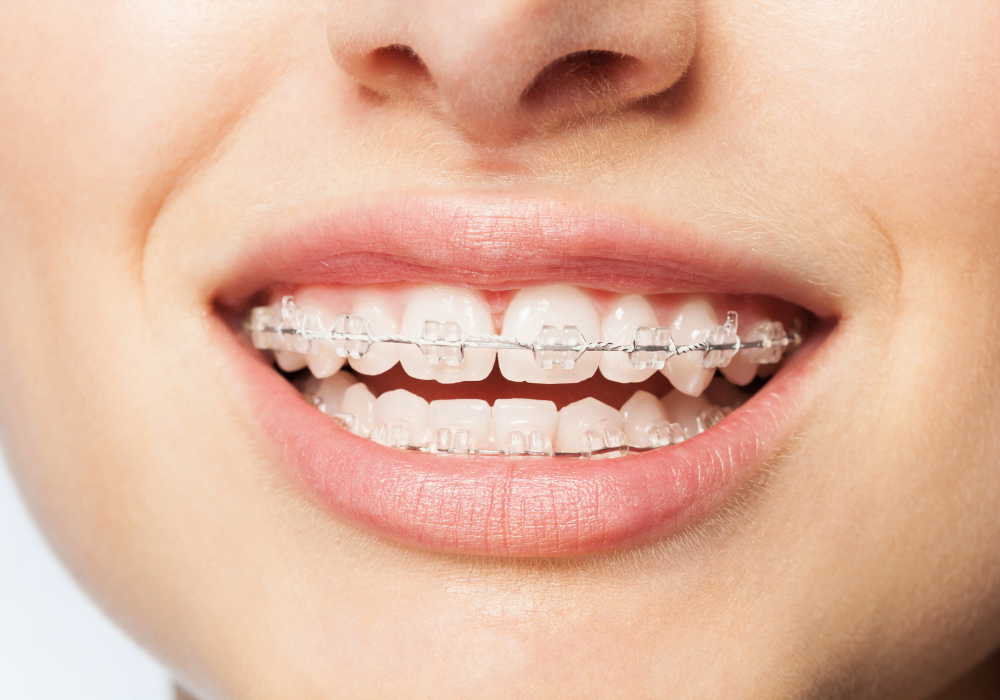
Ceramic braces do the same job as metal ones and are fitted the same way, on the outer face of the tooth. The difference is the material: instead of steel they are tooth-coloured ceramic, so from a metre away they are hard to tell from your own enamel.
It is worth saying up front how far that discretion goes, because it is the reason people ask about them. At a distance and in photographs they do not show. Close up they do, particularly the archwire, which is still metal unless a tooth-coloured one is requested. If what you want is for nothing at all to be visible, that is what lingual braces or clear aligners do, not ceramic.
In exchange for the look they cost more than metal and need slightly more care, because ceramic is more brittle than steel. At the first appointment at our Barcelona clinic we show you how all three systems would look on your own teeth, with the timeline and the cost of each, before you decide.
How they are fitted and what comes next
Fitting is the same as with metal braces and does not hurt: nothing is done inside the tooth and no anaesthetic is needed.
Assessment first. X-ray, photographs and a scan or impression. That produces the movement plan, the estimated timeline and the fixed quote. It also shows whether your case suits ceramic: in very deep bites the lower teeth strike the upper brackets and break them, and that has to be seen beforehand.
Getting the mouth ready. Decay, tartar and inflamed gums are dealt with first. It matters even more with ceramic, because demineralisation around a bracket leaves a white mark that shows badly on a light tooth.
Fitting. The tooth is dried, each bracket is bonded in place and the first archwire goes in. Between one hour and an hour and a half.
Adjustments every four to six weeks. The wire is changed and, above all, the elastics are. That is the real cosmetic maintenance: the ceramic bracket does not stain, the clear elastics do, with coffee, red wine and curry. They are replaced at every visit and come back clear.
Removal and retention. Taking ceramic off needs more care than steel, because the bracket can fracture as it is debonded and the enamel has to be protected. Then the retainer goes in, which is what preserves the result.
If a bracket comes off or breaks, you let us know and it is replaced. It happens somewhat more often with ceramic than with metal, which is why the list of foods to avoid is taken seriously here: ice, whole nuts, very crusty bread and anything sticky.
Why choose ceramic
They show far less. Tooth-coloured, so in ordinary conversation or in a photograph they go unnoticed. It is the reason they exist.
They work exactly like metal ones. They are fixed appliances: bonded on, moving teeth in any direction, complex cases included, without depending on you remembering anything.
They cost considerably less than truly invisible options. They sit between metal and the systems that cannot be seen at all, and for many people that middle ground is exactly what they were after.
The bracket does not stain. Ceramic keeps its colour for the whole treatment. What stains are the elastics, and those are changed at every adjustment.
What ceramic asks of you in return
They are more brittle. Ceramic does not bend, it breaks. They come off and fracture more often than steel, and each incident is an extra visit that can stretch the treatment.
They cost more than metal. The material and the replacements are paid for, and the figure for your case comes out of the assessment.
They are slightly bulkier. A ceramic bracket has a little more volume than a metal one, so it rubs the lip a bit more in the first days. Wax handles it and it passes just the same.
They do not suit every bite. If the lower teeth strike the upper brackets when you close, ceramic will chip. Those cases are combined: ceramic on top, where it shows, and metal below.
Frequently Asked Questions
Bonding them does not hurt and no anaesthetic is needed. What turns up comes afterwards: between six and forty-eight hours later the teeth become tender when you bite, because the archwire is already working, and that lasts three or four days.
With ceramic there is one difference from metal: the bracket is slightly bulkier, so rubbing against the inside of the lip tends to be a little more noticeable in those first days. Orthodontic wax on the points that bother you, which we give you at the appointment, plus soft food, deal with it. After each adjustment you will feel something similar for a day, much milder.
Your case decides it, not the material: twelve to eighteen months for mild crowding, two years or a little more if the bite has to be corrected. The real timeline comes out of the assessment.
What can stretch it are breakages. Every bracket that chips has to be replaced, and that stretch of wire stops working in the meantime, so with ceramic the timeline depends quite a lot on how they are looked after. People who respect the list of hard foods finish on schedule.
Yes, if no retainer is worn. Teeth tend to drift back towards where they were, especially in the first year, and that happens with any orthodontic treatment whatever the material: the appliance places them and the retainer keeps them there.
The day the braces come off the enamel is polished carefully, which takes longer with ceramic, and the retainer goes in: a fine wire behind the lower teeth, which cannot be seen or felt, plus a clear retainer for the night. It is part of the treatment, not an extra, and it is what separates the people who keep the result from the ones who come back years later with crowded teeth again.