To prevent cavities, the evidence points to a toothpaste with fluoride: for adults, 1,350 to 1,500 ppm, which is the figure printed on the box. A fluoride-free toothpaste doesn’t protect as well, unless it contains hydroxyapatite, which did no worse than fluoride in two recent trials.
More than the brand, what matters is using it twice a day, in the right amount, and not rinsing afterward.
The toothpaste aisle is one of the longer ones in the supermarket: with fluoride, fluoride-free, with hydroxyapatite, for gums, for sensitive teeth, for kids. Here’s what the evidence says about each one, how much fluoride is right for each age, and when a fluoride-free toothpaste makes sense.
Contents
Which toothpaste to choose
No single toothpaste suits everyone, but a few simple rules help:
- Adults: a toothpaste with 1,350 to 1,500 ppm fluoride, as recommended by the NHS, the UK’s public health service.
- Children: a fluoride toothpaste in the amount that’s right for their age, which you’ll find below.
- Sensitive teeth: a toothpaste made for sensitivity, used every day.
- Fluoride-free: only if it contains an active ingredient with evidence behind it, such as hydroxyapatite, or if your dentist recommends it.
You’ll find the figure on the box or the tube, in the ingredient list: look for “ppm F” or the amount of fluoride.
Why fluoride toothpaste protects against cavities
It has been studied extensively. A 2019 Cochrane review pooled 96 studies, the majority of them following people for three years.
In children and teenagers, it found high- and moderate-certainty evidence that toothpastes with 1,000 to 1,250 ppm and with 1,450 to 1,500 ppm reduce new cavities compared with a fluoride-free toothpaste, and that 1,450 to 1,500 ppm reduces them slightly more than 1,000 to 1,250 ppm.
In baby teeth, a 1,500 ppm toothpaste also reduced cavities compared with one without fluoride.
How much fluoride toothpaste should contain by age
These are the NHS guidelines:
- Up to age 3: a toothpaste with a minimum of 1,000 ppm fluoride, just a thin smear on the brush.
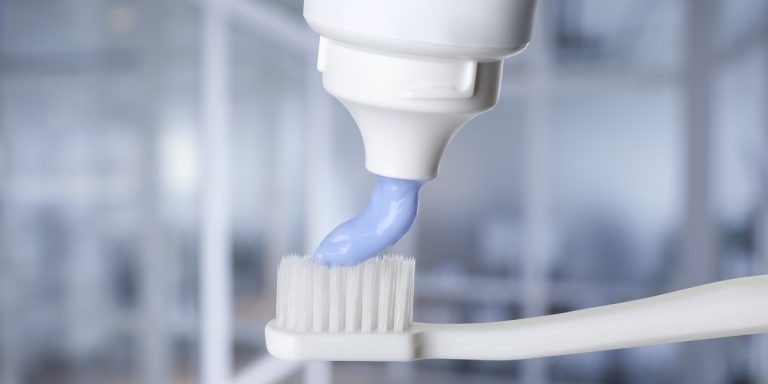
- Ages 3 to 6: a toothpaste with 1,000 to 1,500 ppm, in a pea-sized amount.
- Age 7 and up, and adults: a toothpaste with 1,350 to 1,500 ppm.
The NHS also advises that children shouldn’t eat or lick toothpaste from the tube, and that they get help or supervision when brushing until they are 7 or older. If you’re worried about too much fluoride, our page on dental fluorosis explains what causes it and how it’s treated. For young children, the first visit in pediatric dentistry is free.
Fluoride-free toothpaste: when it makes sense
The Cochrane review compared fluoride toothpastes precisely against fluoride-free ones, and the fluoride-free ones did worse on cavities. That’s why a fluoride-free toothpaste with no other anti-cavity ingredient cleans your teeth but doesn’t protect them as well.
It makes sense when it contains an active ingredient backed by studies, such as hydroxyapatite, or when your dentist recommends it for a specific reason. If you choose a fluoride-free toothpaste, let whoever does your checkups know, so they can keep a closer eye on cavities.
Hydroxyapatite toothpaste
Two randomized clinical trials have compared a hydroxyapatite toothpaste with a fluoride one:
- Adults. An 18-month trial published in 2023, with 189 adults, compared a fluoride-free hydroxyapatite toothpaste with one containing 1,450 ppm fluoride. Among those who completed the study, no new cavities appeared in 89.3% of the hydroxyapatite group and in 87.4% of the fluoride group. Hydroxyapatite did no worse.
- Children. A one-year trial published in 2021, with 207 children, found that hydroxyapatite toothpaste was not inferior to a fluoride toothpaste either, against early cavities in baby teeth.
That’s two trials, against decades of research on fluoride. It’s a reasonable option if you’d rather avoid fluoride, but fluoride still has far more evidence behind it.
Toothpaste for sensitive teeth
The Oral Health Foundation, a UK oral health charity, explains that toothpastes with potassium citrate, potassium nitrate or stannous fluoride help with sensitivity because they block the tiny channels in the dentin. You need to keep using them for the effect to last, and at night you can spread a little over the sensitive area and leave it on.
The foundation advises seeing a dentist if the pain is severe, comes on suddenly, affects just one tooth or lasts more than a few weeks, because it could be a cavity, a cracked tooth, a gum problem or an infection. A small cavity is fixed with a filling, which costs €40.
Toothpaste for your gums
If your gums bleed, no toothpaste fixes the cause on its own. The NHS explains that, in its early stages, gum disease is treated by improving your cleaning routine, including between your teeth, and with a professional cleaning to remove plaque and tartar. You can keep using your fluoride toothpaste and book a checkup.
How to use toothpaste
- Brush twice a day for about two minutes each time, including once before bed.
- For children, use the right amount: a pea-sized amount from ages 3 to 6 and a thin smear under age 3.
- When you’re done, spit out the toothpaste and don’t rinse with water. The NHS explains that rinsing dilutes the fluoride left on your teeth and reduces its effect.
The first visit and the quote are free, and at your checkup we’ll tell you which toothpaste suits your teeth.
Oral cleaning
An ultrasonic clean: what it removes, how long it takes and how often to repeat it. Free assessment.
See the treatmentFrequently asked questions
Which toothpastes don’t contain fluoride?
The ones that say so on the box, often with a “fluoride-free” label. If the ingredients don’t list fluoride or “ppm F,” it doesn’t contain any. Among fluoride-free toothpastes, the hydroxyapatite ones are those that have been tested against cavities in trials.
How many ppm of fluoride should toothpaste have?
For adults and children age 7 and up, 1,350 to 1,500 ppm. For ages 3 to 6, 1,000 to 1,500 ppm. Up to age 3, a minimum of 1,000 ppm in a thin smear. These are the NHS guidelines.
Kids’ toothpaste or adult toothpaste for children?
What matters is how much fluoride it contains, not the cartoon on the tube. According to the NHS, a child aged 3 to 6 can use a toothpaste with up to 1,500 ppm in a pea-sized amount, as long as they don’t swallow it.
Should you rinse after brushing?
No. Spit out the leftover toothpaste and don’t rinse, with either water or mouthwash, so the fluoride keeps working.
Is fluoride toothpaste safe for adults?
Yes, used as directed: twice a day, spitting it out. According to a 2024 Cochrane review, the risk of fluorosis, which is almost always mild, is in young children who take in fluoride while their permanent teeth are forming; that’s why the amounts are adjusted by age.