A dental crown, or cap, is a tooth-shaped restoration that fully covers a tooth that’s badly damaged, broken, weakened or has had a root canal, to protect it and make it usable for chewing again. It’s placed over two visits and, according to Cleveland Clinic, lasts 5 to 15 years on average. At the clinic, a zirconia or porcelain crown costs €270.
Crown and cap are two names for the same thing. Here’s when you need one, what crowns are made of, how one is placed step by step, what it costs, how it differs from a veneer, and how to care for it so it lasts.
Contents
What a dental crown is
Cleveland Clinic describes it as a tooth-shaped cap that fits over the entire tooth, like a snug hat. For it to fit and stay firmly in place, the dentist has to file down a thin layer of enamel before cementing it. The same source makes clear that crown and cap are two names for the same restoration.
Don’t confuse it with the tooth’s natural crown, which is the part you can see above the gumline. The cap is the artificial piece that covers that part.
When you need a crown
According to Cleveland Clinic, a crown is used to:
- strengthen a weak tooth;
- protect and hold together a cracked tooth;
- restore a worn-down or broken tooth;
- hold a dental bridge in place;
- cover a badly stained tooth;
- cover a tooth that has had a root canal;
- cover an implant.
One example is a molar that has lost a lot of its structure to a cavity or a fracture and can no longer hold a filling. Depending on the damage, a filling or a buildup may be enough, or you may need a crown. If the nerve is affected, a root canal, from €175, comes first, and then the tooth is protected with the crown.
Types of crowns by material
These are the options Cleveland Clinic describes, with their pros and cons:
- Metal. Made of gold, palladium, nickel or chromium. They almost never break, they resist wear better than the other types and they require removing only a little of the tooth. Because of their metallic color, they’re used for back teeth that don’t show.
- Porcelain-fused-to-metal. A metal core covered with tooth-colored porcelain. They’re strong, but the porcelain can chip over the years and let the metal show through, and they can wear down the enamel of the opposing teeth.
- Ceramic on a ceramic core. Similar to porcelain-fused-to-metal crowns, but with a ceramic core, so they mimic the translucency of enamel better. They can also chip.
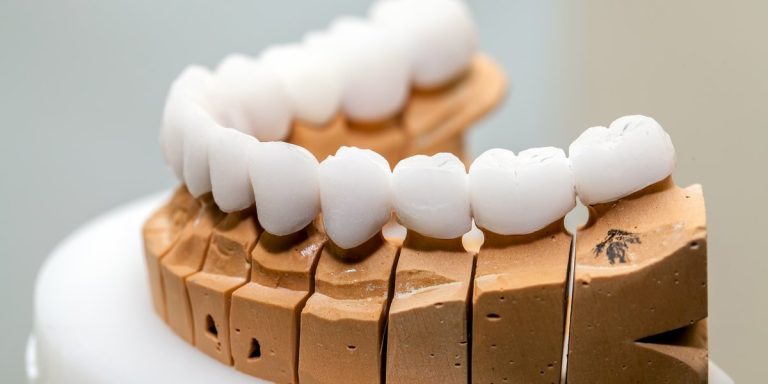
- All-ceramic or all-porcelain, such as zirconia. They look closer to natural enamel than the other types and are a good option if you’re allergic to metals. Zirconia withstands more force than other ceramics and causes less wear on the opposing teeth.
- Resin. Cheaper, but fragile. They’re mainly used as a temporary crown while the permanent one is being made.
At the clinic, crowns on natural teeth are made of zirconia or porcelain. Which one suits you is decided at your visit, based on the tooth and the force it has to withstand.
How a dental crown is placed, step by step
Cleveland Clinic explains that it usually takes two visits:
- Preparing the tooth. Under local anesthesia, the dentist files down a layer of enamel to make room for the crown. If a lot of the tooth is missing, they first rebuild it with filling material so the crown has a solid base.
- Impressions. The shape of the tooth is recorded, with a putty or a scanner, and sent to the lab, where a technician makes the custom crown.
- Temporary crown. The lab usually takes two to three weeks. In the meantime, you wear a temporary resin crown.
- Second visit. The temporary crown is removed, the shape, color and fit of the permanent one are checked, and it’s bonded in place with dental cement.
How much does a dental crown cost?
These are the clinic’s dental prosthesis prices:
- Zirconia or porcelain crown on a natural tooth: €270.
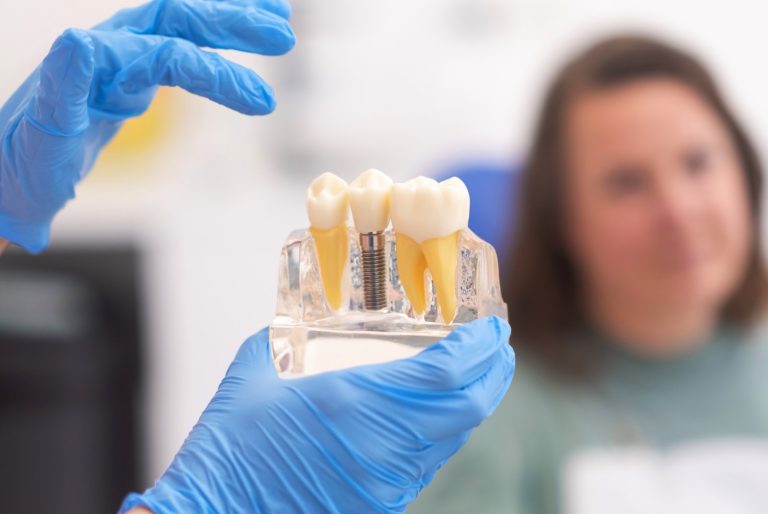
- Crown on an implant: €370.
- Tooth rebuild, if needed before the crown: €50.
- Root canal, if the nerve is affected: from €175.
The price is per tooth. The first visit and the quote are free, and at that visit we check whether the tooth needs a crown or whether something simpler will do.
Crown or veneer: how they differ
Cleveland Clinic sums it up this way: a crown covers the entire tooth and is a treatment to repair a damaged tooth, although it also improves how it looks. A veneer is a thin shell that only covers the front surface and is cosmetic: it hides small chips, cracks or stains on a healthy tooth.
Between a filling and a crown there’s also a middle step, inlays and onlays, which fit into the damaged part of the tooth like a puzzle piece. And if the tooth is so broken that a crown wouldn’t give a predictable result, the alternative is to extract it and place an implant.
After the crown: discomfort, care and how long it lasts
According to Cleveland Clinic, the majority of people go back to their normal routine as soon as they leave the office. It’s normal for the tooth to feel sensitive to hot and cold for a couple of weeks and for the surrounding gum to be a little sore for a few days; a pain reliever such as acetaminophen (paracetamol) or ibuprofen helps.
To make it last:
- Brush twice a day with fluoride toothpaste and a soft toothbrush, and clean between your teeth.
- Avoid chewing ice, very hard nuts, unpopped popcorn kernels and very sticky candy, which can break the crown or pull it loose.
- If you clench or grind your teeth, ask about a custom night guard.
A crown lasts 5 to 15 years on average, and with good care it can last more than 30. Call the clinic if the crown feels loose, you notice a bad taste or bad breath, it has broken, or it has an edge that rubs against your gum.
Dental prosthesis
Fixed, removable and implant-supported options, their materials and how long they last. Free assessment.
See the treatmentFrequently asked questions
Does getting a crown hurt?
It shouldn’t. The preparation is done under local anesthesia, and if you feel anything, more is given. Some sensitivity for a few weeks afterward is normal, but according to Cleveland Clinic, a crown shouldn’t cause pain that keeps you up at night: if it does, it needs to be checked.
How much do crowns for a full mouth cost?
The price is per tooth: €270 for each zirconia or porcelain crown on a natural tooth and €370 on an implant. The total depends on how many teeth really need one, and that’s assessed at the first visit, which is free.
How long does a dental crown last?
On average, 5 to 15 years according to Cleveland Clinic, and with good care it can last more than 30. It’s replaced if it wears down, breaks or no longer fits well.
Zirconia or porcelain crown?
Both are ceramic and tooth-colored, and at the clinic they cost the same, €270. According to Cleveland Clinic, zirconia withstands more force than other ceramics and causes less wear on the opposing teeth. Which one suits you is decided at your visit, based on the tooth.
Can a crown fall off?
It can come loose if you bite something hard or sticky, as Cleveland Clinic notes. If it falls off, keep it and book an appointment so we can check whether it can be put back in place.