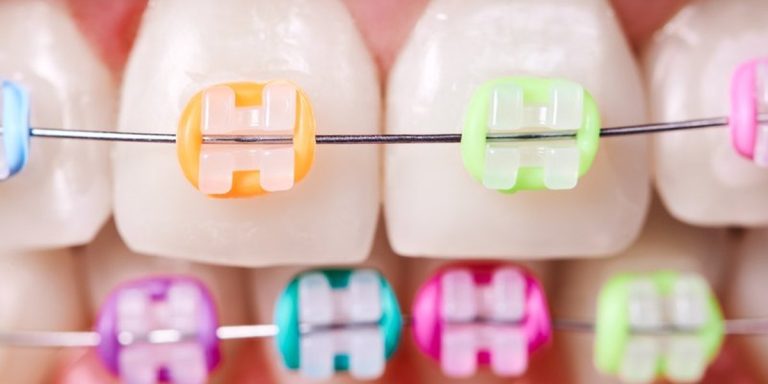
The four types of braces, metal, ceramic, self-ligating and lingual, correct the same problems; what changes is how much they show and what they add to the price. Metal braces add less than the others, and custom-made lingual braces usually cost more than any other fixed braces. None has a set price on our list: we give you a fixed written quote at the first visit, which is free.
On this page we compare the four types and explain what else goes into the quote. How braces move teeth, which problems they correct and how to care for them is covered on the page about orthodontics with braces in Barcelona.
Contents
The four types of braces and how they change the price
They all move teeth the same way, so the choice is rarely decided by the problem itself. It comes down to how much you mind them showing, how much you want to spend and how easy you find them to keep clean.
- Metal. They’re made of stainless steel and show when you smile, but they add less to the price than the others. They use colored elastics that can be changed at checkups. More about them is on the page about metal braces.
- Ceramic or sapphire. They work the same way as metal braces, with a material that matches the color of the tooth; sapphire is also clear. They cost more than metal and, in general, less than lingual braces. More about them is on the page about ceramic braces.
- Self-ligating. They hold the wire with a built-in clip instead of elastic ties. That piece is more complex and usually costs a little more; in ceramic, the cost of that material is added too. How they work and what changes at each checkup is explained on the page about self-ligating braces.
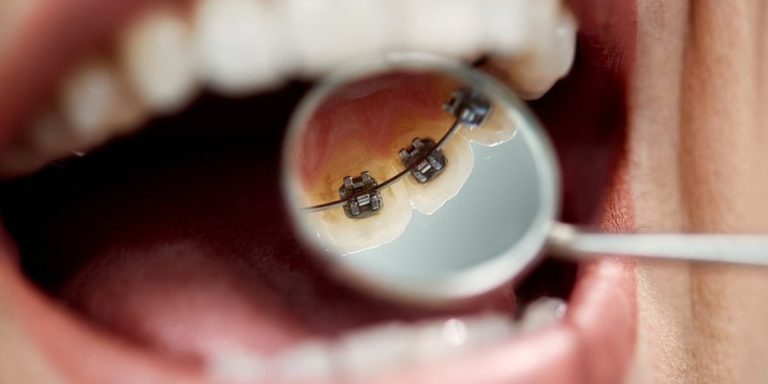
- Lingual. They’re bonded behind the teeth and can’t be seen from the front. They’re custom-made, which is why they add more to the price than any other type, and at first they rub against the tongue. More about them is on the page about lingual braces.
Why no type has a single price
Two people with the same type of braces can pay very different amounts. As the UK’s public health service, the NHS, points out, the cost of orthodontic treatment depends mainly on how complex the case is and on the type of appliance.
Teeth crowded for lack of space, a bite that doesn’t meet when you close, or a badly rotated canine need more movement, more months and more checkups than mild crowding, and that shows in the price. That’s why we’d rather give you the figure for your mouth, fixed and in writing, after we’ve studied it.
What you get from the first visit
At the assessment we study your mouth and decide with you which braces suit your case. If your case can be treated just as well with aligners, we tell you that too: invisible orthodontics is on the price list from €1,490, so you can compare both options with their figures in front of you.
You leave with a fixed quote in writing. That’s the amount you pay, and you have it before the first bracket goes on. The first visit isn’t charged and doesn’t commit you to anything.
How many appointments it takes and how long it lasts
- Free assessment, with the study of your mouth and the quote.
- Fitting in a single appointment: each tooth is cleaned, its bracket is bonded and the archwire is put in place.
- Regular checkups, where we make sure the brackets are still bonded, change or activate the wire and check that each tooth is moving according to plan. The NHS mentions an adjustment every 6 to 8 weeks.
- Retention, once the teeth are in place.
How many months your treatment will take depends on how much the teeth need to move; ask us at the assessment, once your mouth has been studied.
Retention and what can be added
When the braces come off, teeth tend to drift back toward where they were, and retention is there to hold them in place. These are its price-list rates, the same with any type of braces:
- Fixed retainer, €70: a thin wire bonded to the inner side of the teeth.
- Removable retainer for both arches, €60: clear trays you put in and take out yourself.
Your braces quote states in writing whether retention is included or paid for separately. During treatment, plaque also builds up around each bracket and the gums get inflamed more easily, so it’s worth having them checked more often. If you need a cleaning, it costs €30 on the price list.
How to get your quote
The first step is the assessment, which is free and comes with no commitment. You can book an appointment online with your name, email and mobile number and we’ll call you, or call +34 639 65 33 51.
If you’d like to ask us something before coming in, do it through the online dental consultation. The fixed prices of the clinic’s other treatments are on the clinic’s price list.
Frequently asked questions
How much do braces cost in Barcelona?
At our clinic no type has a single price, because the cost changes with the braces you choose and with how complex your case is. We give you a fixed written quote at the first visit, which is free. The retainers at the end do have a set price: €70 for a fixed one and €60 for a removable one.
Which braces cost less?
Metal braces. Ceramic and sapphire cost more because they match the color of the tooth, self-ligating braces usually cost a little more than conventional ones, and custom-made lingual braces add more than any other type. They all correct the same problems; what changes is how much they show.
Do braces cost more than invisible orthodontics?
It depends on the case. Invisible orthodontics starts at €1,490 on the price list, and braces are quoted after we study your mouth. If your case can be treated either way, we give you both figures at the assessment so you can choose.
How much does retention cost when the braces come off?
According to the clinic’s price list, €70 for a fixed retainer bonded on the inside and €60 for removable trays for both arches. Your quote states whether they’re included in the price of treatment.