
In most people, bad breath, or halitosis, starts in the mouth itself. A 2012 scientific review traces it to the mouth in 85% of cases, to the nose or throat in 10% and to the digestive tract or other organs in the remaining 5%.
That is why treatment starts with a careful clean of the tongue, the gaps between the teeth and the edge of the gum, not with a mint or a mouthwash that only covers up the smell.
The same review estimates that around one person in four is affected. Below you will find where it comes from, what to do at home, what we do at the clinic, what the research says about probiotics and when it is time to look beyond the mouth.
Contents
Where bad breath comes from
The smell is produced by bacteria that give off sulphur compounds, and those compounds are what studies measure. According to the UK National Health Service (NHS) and Cleveland Clinic, these are the causes:
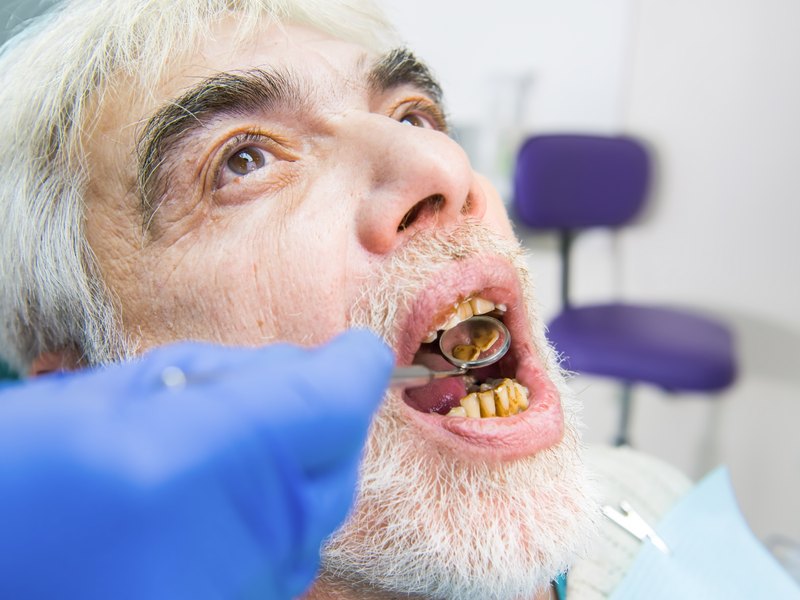
- The mouth, the main one. Plaque and debris on the tongue, above all towards the back, between the teeth and along the gum line. Gum disease and tooth decay can also give off an unpleasant smell.
- A dry mouth. Having little saliva also leads to bad breath.
- Food, drink and tobacco. Anything with a strong smell, such as garlic or onion, and smoking.
- Skipping meals or following very strict diets, which also change your breath.
- Nose and throat. Tonsillitis, the small stones that can form in the tonsils, and nose and throat infections.
- Other conditions. Acid reflux and, less often, diabetes or liver and kidney problems.
If your gums also bleed when you brush, the two may have the same origin, because gum disease causes both. You can read how that is treated in our guide to bleeding gums.
Treating halitosis
When the cause is in the mouth, treatment means removing what feeds those bacteria, and a good part of it happens at home. These are the NHS guidelines:
- Brush your teeth and gums twice a day, for two minutes.
- Clean your tongue once a day with a tongue cleaner or scraper.
- Clean between your teeth once a day with interdental brushes or floss.
- After eating strong-smelling food, sugar-free gum or a sugar-free sweet helps.
- Do not rinse with water straight after brushing.
- Do not smoke and do not drink a lot of alcohol.
An antibacterial mouthwash or toothpaste can help, but neither takes the place of the toothbrush: Cleveland Clinic warns that some mouthwashes only mask the smell, and a patient leaflet from the NHS hospitals in Leeds reminds readers that mouthwash does not remove plaque.
What you cannot do at home is remove tartar. That is the job of an oral cleaning, which costs 30 € at the clinic.
If the gum has already formed pockets, where bacteria hide out of reach of the brush, the area under the gum is cleaned with scaling and root planing, at 60 €. And if the source is a cavity, it is treated with a filling.
Do probiotics help with bad breath?
They help a little, and they are no substitute for cleaning. This is what recent reviews say:
- They lower sulphur compounds. A 2025 meta-analysis that pools 10 studies concludes that probiotics reduce those compounds and improve the odour test, and that they work better combined with cleaning than on their own. It also warns that the studies carry a risk of bias and that their results vary.
- Among the strains tested are Streptococcus salivarius K12 and Weissella cibaria. Another 2025 review, of 6 trials with 360 healthy adults, found fewer sulphur compounds in 5 of them and no serious side effects, although follow-up periods were short.
- The benefit is modest. That is how a 2026 review bringing together 11 meta-analyses describes it, with limited certainty.
So if you are wondering which probiotic to take for bad breath, the honest answer is that none has clearly shown itself to be ahead of the others. What there is are trials with specific strains, like the two above.
If you want to try one, use it alongside your hygiene routine and not instead of it. What they are and what else they are used for is explained in oral probiotics.
When to see a dentist or a doctor
The NHS advises seeing a dentist if bad breath has not gone after a few weeks of looking after your mouth properly, and also if your gums hurt or bleed, if a tooth aches or if you notice one that feels loose.
If the dentist finds your mouth healthy and the smell is still there, the next step is your family doctor. The tonsils, the nose, reflux or diabetes are checked there.
The first visit and the quote are free, and that visit is where we see whether the cause is in the mouth.
Frequently asked questions
Why do I have bad breath if I brush my teeth well?
Because the toothbrush does not reach everywhere. The tongue, the gaps between the teeth and the tartar under the gum hold bacteria even when the teeth themselves are clean. If all of that is clean, what is left is a dry mouth and causes outside the mouth, such as the tonsils or reflux.
Can bad breath come from the stomach?
It can, but it is not common: in the 2012 review, the digestive tract and other organs account for about 5% of cases. Among the digestive causes, the NHS mentions reflux.
Does mouthwash work against bad breath?
An antibacterial one helps, but some only cover the smell for a while. Those containing chlorhexidine can stain the teeth and change your sense of taste when used for a long time. Use it at another time of day, not straight after brushing.
Can gum problems cause bad breath?
Yes. Gum disease is one of the causes that start in the mouth, and it often comes with gums that bleed when you brush. Treating it, with a cleaning or with scaling, is part of treating bad breath.