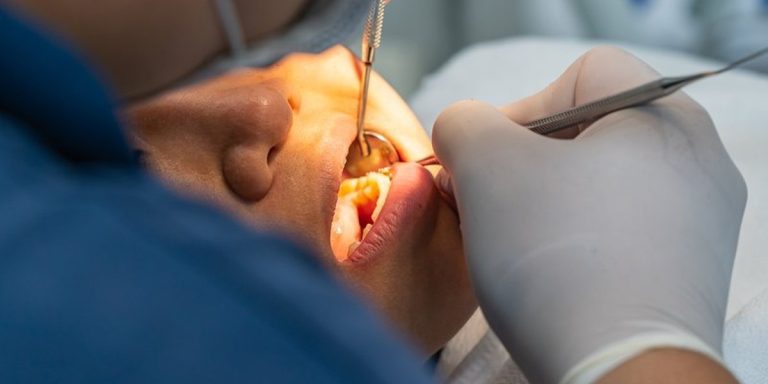

An “infected” wisdom tooth is nearly always pericoronitis: the flap of gum that still covers part of the tooth traps food and bacteria, and it becomes inflamed.
You can recognise it by pain at the back of the mouth, red and swollen gum and, sometimes, a bad taste or a fever. With treatment it usually settles within one or two weeks, but it can come back, and from the second episode onwards the advice is to consider taking the tooth out.
It happens mainly between the ages of twenty and thirty, and more often around the lower wisdom teeth. Below you will see how to tell a tooth that is simply coming through from one that has become infected, how long the pain tends to last, what you can do at home and when it is better not to wait.
Contents
- How to tell if your wisdom tooth is coming through
- Why the gum around a wisdom tooth gets infected
- Symptoms: when it is mild and when it is not
- How long wisdom tooth pain lasts
- How it is treated at the clinic
- What happens if you do not have your wisdom tooth removed
- Risks of wisdom tooth surgery
- Frequently asked questions
How to tell if your wisdom tooth is coming through
Wisdom teeth are the third molars, the last tooth in each row. According to guidance from NICE, the UK National Institute for Health and Care Excellence, they usually come through between the ages of 18 and 24. Some arrive unnoticed; others stay half-way or never come through, because there is no room, because something blocks them or because they have grown at an angle.
The signs that one is on its way can be felt behind the last molar you already had:
- The gum in that area looks raised or slightly redder.
- A white piece of tooth shows through, sometimes partly covered by a fold of gum.
- You feel a mild ache that comes and goes, above all when you chew on that side.
That mild ache is normal. What is not, and what separates a tooth that is coming through from one that has become infected, is strong pain, swelling that keeps growing or a fever. To find out which way the tooth is heading and whether it has room, the test is a panoramic X-ray.
Why the gum around a wisdom tooth gets infected
When the tooth only comes through part of the way, a hood of gum is left over it, which dentists call an operculum. Food that the brush cannot reach slips in between that hood and the tooth, bacteria multiply and the gum becomes inflamed. This is called pericoronitis, and according to Cleveland Clinic its main cause is precisely that the tooth has not finished coming through.
That is why brushing harder does not fix it on its own, although good hygiene lowers the risk: as long as the hood is there, the gap will keep trapping debris.
Symptoms: when it is mild and when it is not
Pericoronitis comes in two forms, and it helps to know which one you have:
- Chronic, the mild form. A dull ache that comes and goes, a bad taste and bad breath that brushing does not clear.
- Acute, the form that should not wait. Intense pain at the back of the mouth, red and swollen gum, pus, fever and, sometimes, a swollen face on that side.
Go to an emergency department if the swelling spreads across your face or neck, if you find it hard to swallow or breathe, or if you have a fever. These are the warning signs Cleveland Clinic gives for not waiting for an appointment.
How long wisdom tooth pain lasts
It depends on what is causing it:
- If the tooth is coming through, the discomfort comes and goes for as long as it takes to appear, with no set timeframe.
- If it is pericoronitis, with treatment it usually clears up within one or two weeks. What you should keep in mind is that it can return while the tooth is still half-way through.
- If it has already been removed, the pain and swelling should start to improve after a day or two, and the discomfort can last up to two weeks, according to the NHS. If you are weighing up an extraction, see how much it costs to remove wisdom teeth in Barcelona.
How to ease wisdom tooth pain until your appointment
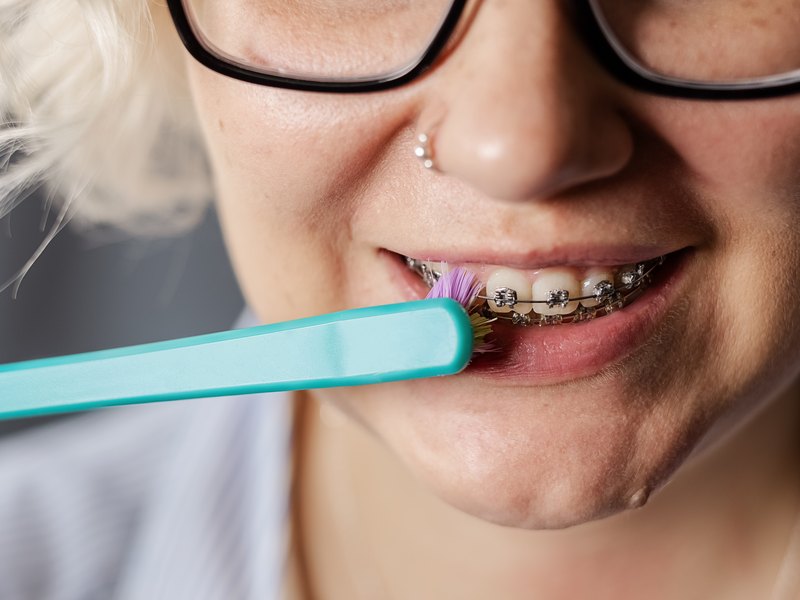
None of this replaces having it examined, but it helps you get through the days:
- Rinse with warm salt water three to four times a day, as Cleveland Clinic recommends. It flushes out the debris left under the gum.
- Clean the area gently with a soft-bristled brush, to remove trapped food without hurting the gum.
- A common painkiller, such as paracetamol or ibuprofen, at the dose shown on the leaflet.
- Antibiotics only if they are prescribed by whoever has examined your mouth. Do not take ones you have left over at home.
If it is the gum that hurts more than the tooth, you will find more advice in solutions for gum pain.
How it is treated at the clinic
At the clinic the area under the hood of gum is cleaned thoroughly. After that, depending on how it looks, the options Cleveland Clinic describes are an antibacterial mouthwash, antibiotics if the infection calls for them, removing the hood of gum with a minor procedure, or taking the tooth out.
When to take it out has a fairly clear answer. NICE guidance considers that a first episode of pericoronitis, unless it is severe, does not justify extraction by itself, while a second or later episode does. The price of the procedure is set out in the cost of wisdom tooth extraction in Barcelona.
What happens if you do not have your wisdom tooth removed
If it is not causing problems, nothing. The same NICE guidance advises against removing healthy impacted wisdom teeth as a precaution: keeping an eye on them at check-ups is enough.
What is worth knowing is that, according to NICE, a tooth that stays half-way through is linked to pericoronitis, to a higher risk of decay and gum disease in the molar next to it, and to orthodontic problems over the years. When one of these appears, or a cyst around the wisdom tooth, the situation changes and the advice is to remove it.
Risks of wisdom tooth surgery
Taking out a wisdom tooth is a routine procedure, and even so it carries risks, described by the NHS, that are worth knowing before you decide:
- Dry socket. The blood clot that should close the gap does not form properly.
- Infection of the wound, which is treated with antibiotics.
- Nerve irritation, which leaves tingling or numbness in the lip, chin or tongue. It usually improves, although it can take weeks or months.
The risk to the nerve depends on how close the roots are, and that shows up on the X-ray before starting. Deeply impacted teeth or teeth lying against the nerve are planned by the clinic’s maxillofacial surgery team.
The first visit and the quote are free. If you are in pain right now, say so when you book.
Frequently asked questions
Can an infected wisdom tooth make your face swell?
Yes, in the acute form of pericoronitis the swelling can reach the face. If it spreads towards the neck, you find it hard to swallow or breathe, or you have a fever, go to an emergency department without waiting for your appointment.
How long do wisdom teeth take to come through?
There is no set timeframe. They usually appear between the ages of 18 and 24, and some stay half-way or never come through. An X-ray shows whether they have room to finish coming through.
Do lower wisdom teeth get infected more often?
Yes. Pericoronitis is more common around the lower wisdom teeth, although it can also affect the upper ones.
Can bad breath come from a wisdom tooth?
Yes. Bad breath and a bad taste are typical symptoms of chronic pericoronitis, the mild form, because of the debris that collects under the gum. If it happens alongside a half-erupted wisdom tooth, that is the first thing to look at.