
Fixed teeth in 48 hours, known as teeth in a day, are a temporary prosthesis screwed onto implants placed two or three days earlier. The final prosthesis goes in a few months later, and it can only be done this way if there’s enough bone and the implants are firm from the moment of surgery.
This article is about what comes after: what you’re wearing, whether it has screws or not, how you eat, speak and clean in the first months, and what it costs to replace all your teeth. How the technique works and who it’s for is covered in our article on immediate loading.
Replacing a whole arch at once is a big step, and the questions people have when they take it are almost never about the surgery: they’re about daily life. Whether it shows, what you can eat, whether you have to take anything out at night, how to clean what you can’t see. Here are the answers, in the order they usually come up.
Contents
What “fixed teeth” means
The phrase is used for different things, and it’s worth knowing which one is meant before comparing prices:
- Fixed teeth on implants. A prosthesis screwed onto implants that only the dentist can remove. That’s what this article is about.
- Fixed bridge without implants. Artificial teeth that rest on your own teeth, reshaped, on either side of the gap. It works for gaps of one or two teeth with healthy teeth next to them, not for an arch with no teeth. We compare it with an implant in dental implant vs bridge.
- Removable dentures. They come out for cleaning and for sleeping. It’s the option without surgery, and it’s covered in dental prostheses in Barcelona.
And there’s one use that has nothing to do with losing teeth: the orthodontic fixed retainer, a thin wire bonded behind the teeth so they don’t move again after braces or aligners. Can teeth move with a fixed retainer? Yes.
If the wire comes loose from a tooth, that tooth is free; and if the wire bends or warps, it can push teeth into new positions. A study that reviewed 3,500 patients with fixed retainers found unexpected movements of this kind in few cases, but it did find them, and that’s why the retainer gets checked too. We explain it in fixed and removable retention after orthodontics.
Fixed teeth with or without screws
A prosthesis on implants is held in place in one of two ways:
- Screw-retained. The prosthesis has small holes through which screws go down to the implants, and those holes are covered with tooth-colored composite. The dentist can remove it for cleaning or repairs without breaking anything.
- Cemented. The prosthesis is bonded onto abutments screwed into the implants, with no holes in sight.
“No screws” sounds better than it is. With a cemented prosthesis, the cement that seeps out below the gum is hard to remove completely, and a study using an endoscope found leftover cement on the majority of the implants that had inflammation around them.
That’s why, in a full arch on implants, a screw-retained prosthesis is the usual choice, and it’s also how the 48-hour temporary is fixed in place.
Some people who say “fixed teeth without screws” mean fixed teeth without implants. In that case, the options are the ones above: a bridge on your own teeth, if there are healthy teeth left to support it, or a removable denture.
What you’re wearing at 48 hours
A fixed temporary prosthesis, usually made of resin, screwed onto the implants. This approach, implants and a fixed temporary prosthesis within hours or days, was described for full arches in the early 2000s and is a routine procedure today.
What’s advertised as fixed dentures in 24 hours or teeth in a day is this same thing; the exact timing depends on the clinic and the lab, and at ours it’s 48 to 72 hours.
The temporary takes care of appearance, speaking and eating soft food. What it isn’t designed for is grinding up hard food: resin is softer than porcelain and is made to last a few months.
It doesn’t come out at home. If you notice it moving, a screw loosening or something rubbing, call soon, because at this stage ongoing movement is exactly what keeps the implants from integrating.
The first weeks: eating and speaking
Eating
While the implants integrate, which takes two to three months, the diet is soft: pasta, rice, eggs, fish, cooked vegetables, legumes, ripe fruit. Crusty bread, nuts, ice, hard candy, chewing gum and meat you have to tear are off the menu.
It helps to cut food into small pieces and chew with the whole arch, not just the front teeth. Once the final prosthesis is in, you can eat everything again.
Speaking
For the first few days some sounds are harder, especially s and z, because your tongue has to get used to a new shape of teeth and palate.
It’s common for pronunciation to change at first and settle with use: in a study of immediate-load prostheses, speech adapted within the usual period of three to six months. Reading aloud for a while each day shortens that period.
How to clean fixed teeth
There’s a small space between the prosthesis and the gum, and that’s where plaque and food debris build up. A regular toothbrush doesn’t reach it, so cleaning at home has three parts:
- Toothbrush, twice a day, angled toward the gum.
- Interdental brushes or floss with a stiff end, which go under the prosthesis.
- Water flosser, especially for the spots neither of the other two reaches.
What a water flosser is for
A water flosser shoots a fine jet of pressurized water that flushes debris and plaque out of the places a brush can’t get into, which on a prosthesis on implants are exactly the ones underneath.
In a 30-day trial with people who had implants, the water flosser reduced gum bleeding more than string floss; it’s a small study funded by a water flosser manufacturer, so it should be read with that caution. It doesn’t replace the toothbrush: it adds to it.
What about fluoride toothpaste? It’s for the natural teeth you still have: fluoride strengthens enamel against decay. Implants and the prosthesis can’t get cavities, but if you still have your own teeth in the other arch, they need their fluoride toothpaste as before.
Besides cleaning at home, there are checkups with a professional dental cleaning. That’s where inflammation around the implants is caught in time, before it turns into peri-implantitis.
If you clench or grind your teeth
Bruxism is associated with more implant failures, and with a newly placed arch it’s worth knowing from the start. What does a night guard do in that case?
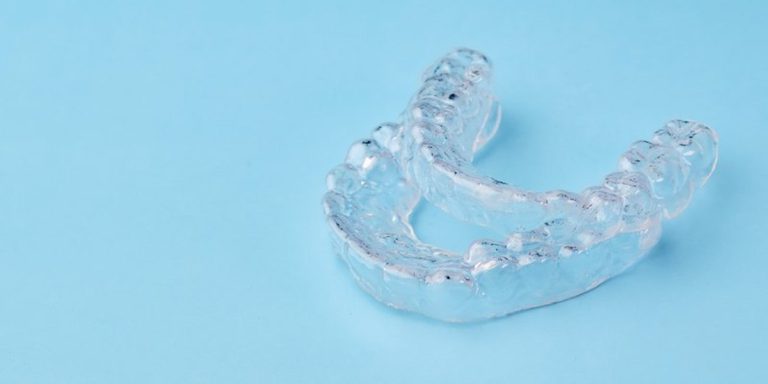
It’s a custom-made resin piece worn at night that takes the force of clenching instead of the implants and the prosthesis. The unloading splint, or night guard, costs €260 on our price list, and how the problem is diagnosed and treated is explained in bruxism treatment in Barcelona.
How much it costs to get a full set of fixed teeth
Replacing all your teeth isn’t quoted by multiplying the price of one implant: it’s planned as a whole, and the number of implants depends on the bone available. For reference, on our published treatment price list:
- Implant study: €0. This is the visit that tells you whether your case allows fixed teeth in 48 hours, and with how many implants.
- Porcelain prosthesis on eight implants: €9,700, the reference for a full fixed arch on implants.
- Implant with crown: €1,100, if what you need is a single fixed tooth.
- Removable complete prosthesis: €540, so you can compare it with the option without surgery.
If it’s both arches, each one is quoted according to its bone and its number of implants. You leave the first visit with a written plan and the fixed price for your case, with bone regeneration included in the quote if it’s needed.
Questions to bring to the first visit
- Will my prosthesis be screw-retained or cemented, and why?
- What are the temporary and the final prosthesis made of?
- What do I need at home to clean it, and who will show me how?
- Do I need a night guard?
- How often are the checkups, and what’s done at them?
Dental implants
A fixed price including implant, abutment and crown. Free first visit.
See the treatmentFrequently asked questions
Are teeth in a day really placed in one day?
It depends on the clinic and the lab: the technique is the same immediate loading, and what changes is how long it takes to screw in the temporary. At ours it’s 48 to 72 hours. In every case that first prosthesis is temporary, the final one goes in months later, and it can’t be done if bone is lacking or if the implants aren’t firm at surgery.
Will people notice the teeth aren’t mine?
The temporary already has the shape and color of teeth, although it’s made to last a few months. The final one is custom-designed, with the shape, size and shade tested with the temporary. When a lot of bone has been lost, the prosthesis may include a pink gum section so the result looks natural.
Can I sleep with them in?
Yes. They’re fixed and don’t come out, either for sleeping or for cleaning. If you clench your teeth at night, you should sleep with the night guard over them.
Can they cause bad breath?
If debris builds up under the prosthesis, yes. That’s a sign the area needs cleaning with the water flosser or the interdental brushes. If the bad taste or smell comes from a single spot and the gum bleeds there, it needs checking, because it may be inflammation around an implant.
What happens if a tooth on the prosthesis breaks?
It gets repaired. Because the prosthesis is screw-retained, the dentist removes it, the lab fixes the tooth and it’s screwed back in. It happens more often with the resin temporary than with the final one, and it’s one of the reasons to stick to the soft diet.
Can you get fixed teeth without implants?
For a small gap with healthy teeth next to it, yes: that’s a bridge. For an arch with no teeth, no, because there’s nothing to rest it on; without implants, the alternative is a removable denture.
The technical side, what makes immediate loading possible and when it’s better to wait, is in immediate load dental implants. And if you want to know whether your case allows fixed teeth in 48 hours, you can book the free study online.