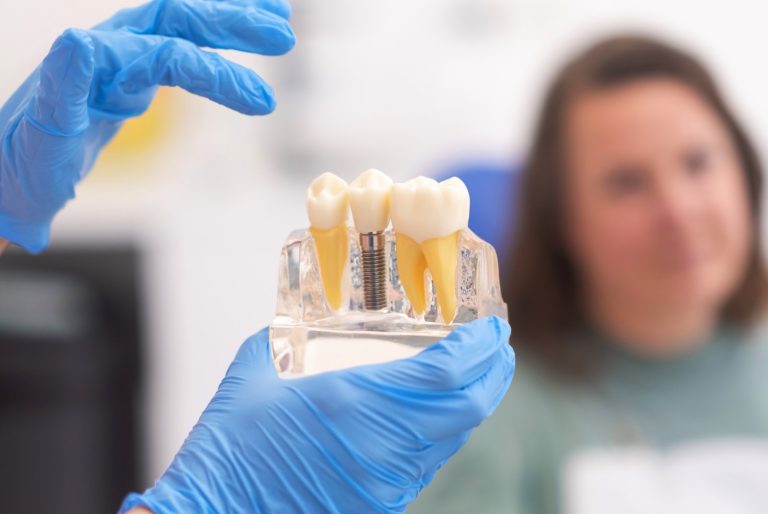
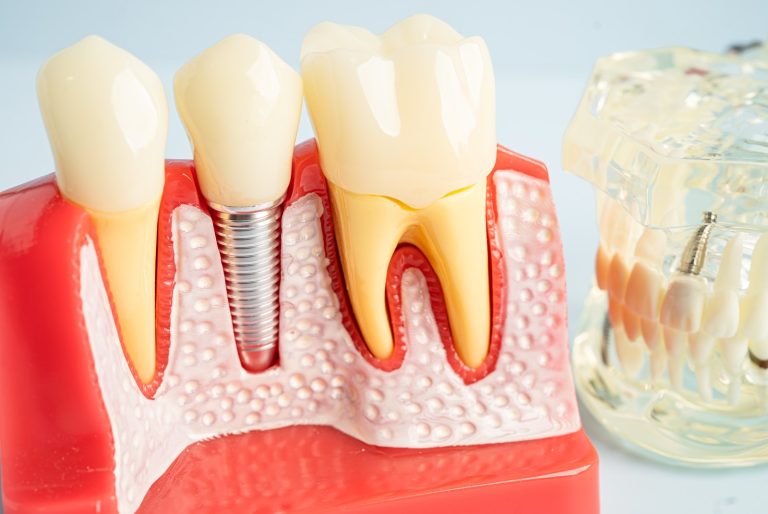
Peri-implantitis is an infectious disease that causes inflammation of the bone and connective tissue around a dental implant. Chronic inflammation leads to bone loss, which can make the implant wobble and eventually fall out.
Contents
What causes peri-implantitis?
Given that an implant cannot adhere to the gums as easily as natural teeth, there is a considerable risk of inflammation and ultimately peri-implantitis. The cavity remains moist around the implant, which facilitates the growth of harmful microorganisms. This can lead to bone loss in addition to inflammation.
Mucositis or peri-implantitis: they are not the same
This is the most repeated confusion, and it changes the prognosis. Peri-implant mucositis is inflammation of the gum around the implant with no bone loss: it bleeds on brushing, the gum looks red and swollen, and it is reversible if treated in time. Peri-implantitis is the next step: the same inflammation once it has already taken bone with it and the implant starts to lose support.
The difference is not academic. Mucositis clears up with professional cleaning and a corrected brushing technique; bone lost to peri-implantitis does not come back on its own, and past a certain point it does not come back at all. That is why a periodic implant check-up is not a courtesy recommendation: it is what separates a gum problem from losing the implant.
Risk factors include:
- Smoking
- Periodontitis (the inflammation that destroys the bone and the tissues holding the tooth in place)
- Genetics
- Diseases such as diabetes
Signs and symptoms of peri-implantitis
- Bleeding
- Redness and swelling of the mucosa
- Pus formation around the implant
- Pain around the implant
- Bone loss
- Implant mobility
- Gum recession, with the implant starting to show
Although peri-implantitis is a complex disorder and bacteria play an important role, they are most likely not the main factor contributing to the development of this disease. The same germs found in peri-implant pockets also live around healthy implants.
Treatment for peri-implantitis
Surgical procedures that can be performed to treat peri-implantitis include the following:
Access surgery. It consists of opening the flap, removing the granules and cleaning the surface of the implant.
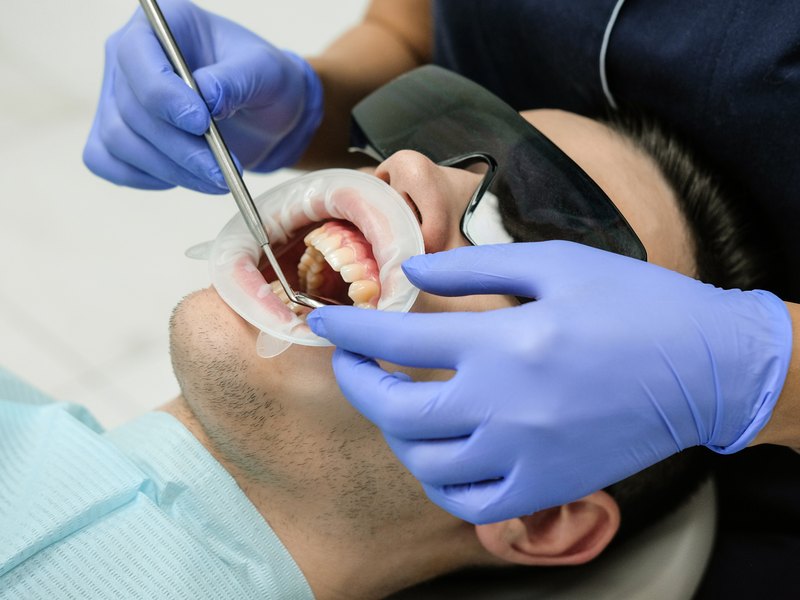
The first treatment consists of using curettes and ultrasound to eliminate bacterial accumulation on the surface of the dental implant. If this is not sufficient, resective, regenerative or combined techniques have been proposed, to be chosen according to the degree of skin defect.
In more complex cases the solution is to remove the compromised dental implant, let the area heal and, once the bone allows it, place another one.
How it is diagnosed
An implant does not hurt when it starts to fail, and that is precisely the problem: by the time it becomes uncomfortable, the bone has already been receding for some time. That is why the diagnosis is not made by looking, it is made by measuring, and there are two measurements:
- Probing. The contour of the implant is traced with a millimetre probe, recording the depth and whether it bleeds. Healthy gum tissue does not bleed on probing.
- The X-ray. It is compared with the one taken on the day the crown was fitted. Without that reference there is no way of knowing whether the bone visible today is the bone that has always been there or the bone that is left.
From this comes the one distinction that changes the treatment: if there is inflammation but the bone is intact, it is mucositis; if the bone has receded compared with the reference X-ray, it is peri-implantitis.
How it is prevented, which is where the real gains are
Peri-implantitis is treated poorly and prevented well, so almost everything that matters happens beforehand:
- Treat gum disease BEFORE placing implants. Anyone who has lost teeth to periodontitis starts with a higher risk, and placing implants in a mouth with an active infection is sowing the problem. First scaling and root planing, and only then the implant.
- Regular check-ups and maintenance. An implant needs its professional cleaning just as a tooth does, plus a follow-up X-ray that makes comparison possible.
- Clean between the implant and its neighbour. A toothbrush alone does not reach. Interdental brushes or a water flosser, every day.
- Stop smoking. It is the modifiable risk factor that carries the most weight on this list.
- A crown that can be cleaned. If the design does not let an interdental brush through, the patient cannot do their part however hard they try.
Once bone loss is established and extensive, the ground shifts to periodontal surgery, and the implant cannot always be saved. That is the reason for being insistent about check-ups.
Frequently asked questions
Does peri-implantitis hurt?
Hardly ever at the start. What is usual is bleeding when brushing and gum that looks red or swollen, with no pain. Pain and a loose implant appear late, once a fair amount of bone has already been lost. So waiting until you feel something does not work: what gives you warning in time is the check-up, not the symptom.
Can bone lost around an implant be recovered?
Some of it sometimes can, with regenerative surgery, and it depends a great deal on the shape of the defect: those that surround the implant like a crater respond better than those where the bone has receded evenly all the way round.
What never happens is that it comes back on its own. That is why the realistic aim is usually to halt the loss and leave the area clean and maintainable, rather than return the bone to its starting point.
If the implant is lost, can another one be placed in the same spot?
In many cases yes, but not the same day and not without conditions. The implant has to be removed, the area cleaned, the bone allowed to heal and, frequently, grafted before implanting again. And the cause has to be resolved: repeating the implant without changing the hygiene, the smoking or the gum disease leads to the same place.
How often should an implant be checked?
The usual interval is a check-up with probing once a year, and a follow-up X-ray as often as the case requires. Anyone who smokes or has had periodontitis tends to need shorter intervals. The first X-ray, the one taken on the day the crown was fitted, is what gives every later one its value: without it there is nothing to compare against.
If you have implants and it has been a while since anyone checked them, or you notice the gum bleeding around one, book an assessment: measuring costs one visit and arriving late costs the implant.