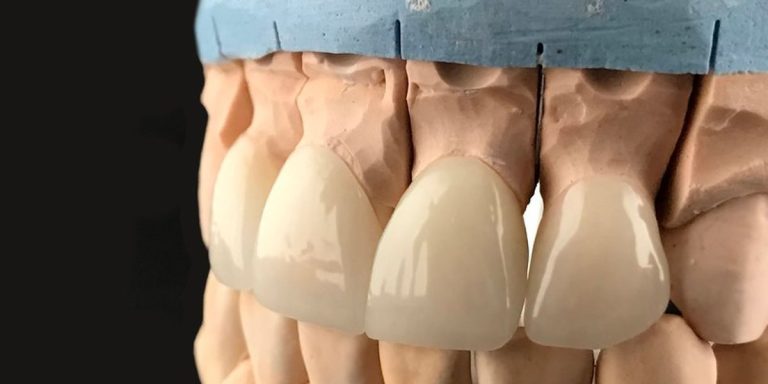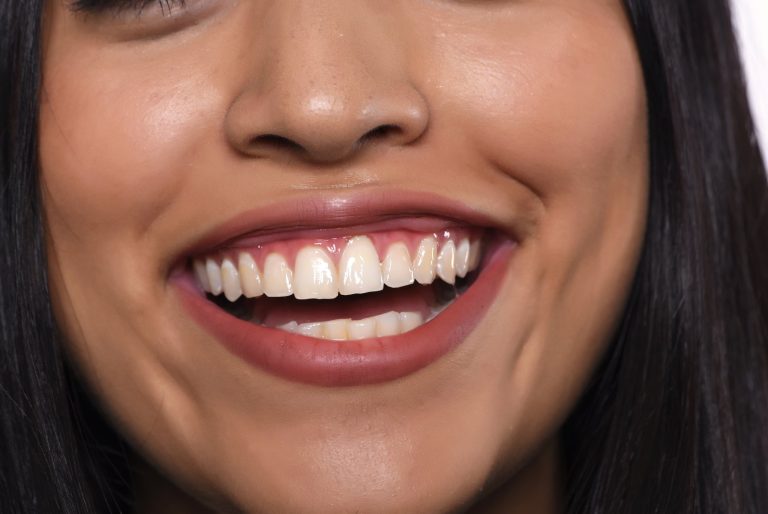
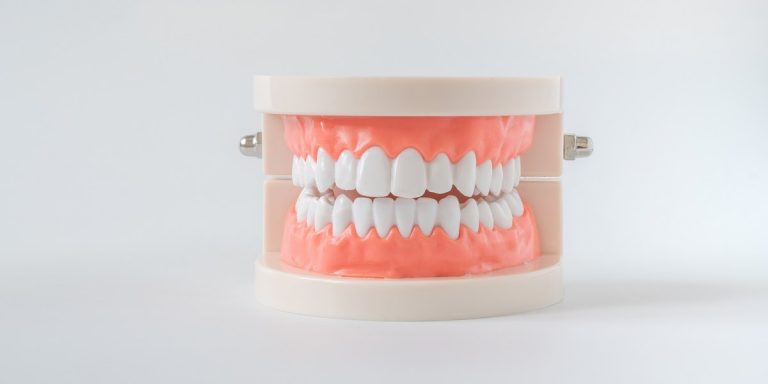
The names of teeth depend on their shape and what they do. An adult has 32: 8 incisors, 4 canines, 8 premolars and 12 molars, counting the 4 wisdom teeth. Children have 20 baby teeth.
Dentists in Spain refer to each tooth with two digits: the first one gives the quadrant of the mouth and the second one the tooth, counting from the center. So 11 is the upper right central incisor and 36 is the lower left first molar.
When you hear “tooth 46 has a cavity” or “we need to look at 21” at the dental office, they’re talking about one specific tooth. Here are the names of the teeth and what each one does, how the numbering works, what the parts of a tooth are, and whether teeth are bones or not.
Contents
How many teeth we have
According to the American Dental Association (ADA), children have 20 baby teeth, which start coming in at around 6 months, and adults end up with 32 permanent teeth by about age 21. Cleveland Clinic adds that the majority of adults have 32, although some people have a few more or a few less.
It’s common to count 28 in an adult: that’s what’s left if the four wisdom teeth have been removed or never formed.
Names of teeth and what each one does
Teeth fall into four types, and each quadrant of the mouth (upper right, upper left, lower left and lower right) has some of each. These are Cleveland Clinic’s descriptions:
Incisors
These are the eight front teeth, four on top and four on the bottom: the two central and the two lateral incisors in each arch. They have a thin edge for cutting food when you bite, and they’re the first teeth people see when you smile.
Canines
There are four, one per quadrant, right behind the incisors. They have a pointed tip and they’re used for tearing tough foods, like meat or crunchy vegetables. You may also hear them called cuspids or eyeteeth.
Premolars
There are eight, two per quadrant, between the canines and the molars. They share features of both: they help tear and also crush food. Baby teeth don’t include premolars.
Molars and wisdom teeth
These are the back teeth: twelve in total, three per quadrant. They have a broad surface for crushing and grinding food, and according to Cleveland Clinic they do about 90% of your chewing.
The third molar in each quadrant is the wisdom tooth, the last one to come in. When there isn’t enough room for it or it only partly erupts, it’s the tooth that often causes problems, as we explain in the article on infected wisdom teeth.
Tooth numbers: how your dentist names each tooth
Dental offices in Spain use the numbering system of the FDI World Dental Federation. Each tooth has two digits:
- The first digit is the quadrant. For permanent teeth: 1, upper right; 2, upper left; 3, lower left; 4, lower right. Right and left are the patient’s, not those of the person looking at them.
- The second digit is the tooth, counting from the center of the mouth toward the back: 1, central incisor; 2, lateral incisor; 3, canine; 4, first premolar; 5, second premolar; 6, first molar; 7, second molar; 8, wisdom tooth.
So 21 is the upper left central incisor, 13 is the upper right canine and 48 is the lower right wisdom tooth.
For baby teeth, the quadrants become 5 to 8 and each one has only five teeth, numbered 1 to 5: 51 is the upper right baby central incisor and 85 is the lower right second baby molar.
If you’ve ever seen a dental report with numbers from 1 to 32, that’s the system used in the United States: according to Cleveland Clinic, it starts at the upper right wisdom tooth and goes all the way around the mouth.
Parts of a tooth
On the outside, a tooth has two parts; on the inside, four layers. This is how Cleveland Clinic describes them:
- Crown. The part you can see, above the gum.
- Root. The part that sits inside the bone, covered by the gum. It anchors the tooth to the ligament that attaches it to its socket.
- Enamel. The outer layer of the crown.
- Dentin. The layer under the enamel, which is less hard than enamel.
- Cementum. It covers the root and, together with the gum tissue, helps anchor the tooth to the bone.
- Pulp. The center of the tooth, with nerves, blood vessels and connective tissue. When an infection reaches it, the tooth hurts; treating it is what endodontics does.
What is the crown of a tooth?
It’s the visible part of the tooth, the part that shows above the gum and is covered in enamel. Don’t confuse it with a dental crown or cap, which is an artificial piece that covers that part when the tooth is badly damaged.
What does tooth enamel do?
It protects the tooth from the bacteria that cause decay. According to Cleveland Clinic, it’s harder than any other substance in the human body. When enamel wears away and the dentin is exposed, the risk of decay goes up, and the majority of teeth that are sensitive to cold and heat have worn enamel or an exposed root.
Are teeth bones?
No, even though they look alike. Cleveland Clinic explains that bones repair themselves when they break and teeth don’t, and that teeth have no marrow. They’re organs of ectodermal origin, like hair, skin or sweat glands. That’s why a broken or decayed tooth doesn’t heal on its own and has to be repaired at the dental office.
Dental arches and dentition
Teeth sit in two arches: the upper one, in the maxilla, and the lower one, in the mandible. An adult with all their teeth has 16 in each arch. The full set of teeth is called the dentition, not to be confused with dentures, the removable prosthesis that replaces missing teeth.
Baby teeth are replaced by permanent ones during childhood, and it’s a good idea for a dentist to keep an eye on that change. In pediatric dentistry, the first visit is free.
Book an appointment
Choose the day and time that suit you for your free initial assessment, or call us.
Book onlineFrequently asked questions
Which tooth is number 36?
The lower left first molar. The 3 stands for the lower left quadrant and the 6 for the first molar, counting from the center. Its twin on the other side is 46.
Which are the upper incisors?
The four upper front teeth: the two central incisors, 11 and 21, and the two lateral incisors, 12 and 22.
What are the types of teeth?
Four: incisors, for cutting; canines, for tearing; premolars, for tearing and crushing; and molars, for crushing and grinding.
What numbers are the wisdom teeth?
18, 28, 38 and 48: the last tooth in each quadrant.
How many baby teeth does a child have?
Twenty: eight incisors, four canines and eight molars. There are no premolars among baby teeth, which is why each quadrant has five teeth instead of eight.