An electric toothbrush removes a little more plaque and reduces gum inflammation a little more than a manual one, according to a 2014 Cochrane review, although it isn’t clear whether that difference is noticeable in your mouth.
What really counts is brushing for two minutes, twice a day, with fluoride toothpaste. An electric toothbrush is worth it mainly if you find it hard to brush well by hand or if you wear braces.
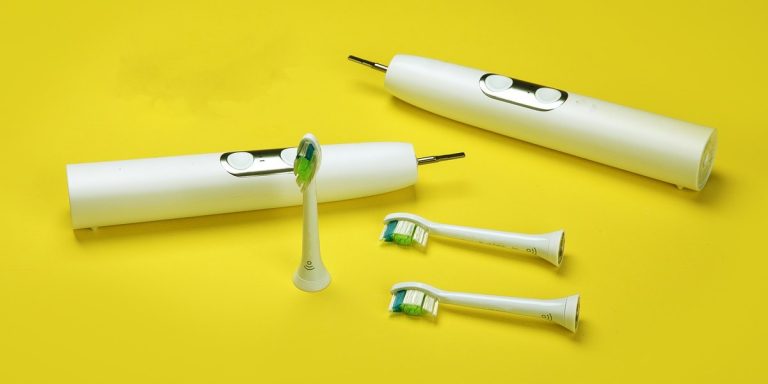
There are electric toothbrushes with a round head that rotates, sonic ones that vibrate, and models with a timer, a pressure warning or a phone app. Here’s what the studies say, who benefits, how to choose one without getting carried away by the extras, how to use it, and how to clean and disinfect the brush.
Contents
Does an electric toothbrush clean better than a manual one?
Slightly, on average. The 2014 Cochrane review pooled 56 trials and analyzed data from 4,624 people. With moderate-quality evidence, electric toothbrushes reduced plaque 11% more than manual ones in the first three months and 21% more after three months.
Gum inflammation (gingivitis) went down 6% and 11% more, respectively. The authors add that the clinical importance of those figures is unclear and that the side effects recorded were local and temporary.
Health services sum it up the same way. The NHS, the UK’s public health service, says it doesn’t matter whether your toothbrush is electric or manual as long as you clean every surface of every tooth and use fluoride toothpaste, although some people find an electric one easier. The American Dental Association (ADA) also considers both types effective at removing plaque.
As the NHS puts it, cleaning your teeth well at least twice a day matters more than the type of brush. If you already brush carefully, switching makes only a small difference.
Who benefits from an electric toothbrush
- If moving your hand is hard for you. The ADA notes that older adults, people with disabilities or dexterity problems, and children may find an electric toothbrush easier to use.
- If you wear braces. The ADA also mentions it for people with orthodontics with braces, where plaque builds up around each bracket.
- If you brush in a hurry. The timer helps you reach the two minutes the NHS recommends, and some models signal every 30 seconds so you move on to another area.
For children, the NHS recommends helping them brush or supervising them until at least age seven, whatever toothbrush they use.
How to choose an electric toothbrush
No single toothbrush suits everyone. These are the things that matter:
- Type of movement. Brushes with a round head that rotates and oscillates account for the bulk of the trials in the Cochrane review, with reductions in plaque and gingivitis in the short and the long term. Sonic brushes, which vibrate from side to side, also have trials, though fewer.
- Soft bristles. The ADA recommends soft bristles because they lower the risk of wearing down your gums. Brush heads labeled “soft” or “sensitive” are a good choice if your gums are delicate.
- Small head. The NHS advises a small brush head, which reaches your back teeth more easily.
- Timer. Almost every model has one, and it’s the extra that really helps day to day.
- Pressure warning. It lights up when you press too hard. Useful if you notice that you brush with a lot of force.
- Replacement heads. Before you buy, check the price of the brush heads and how easy they are to find, because you’ll replace them several times a year.
The phone app, the extra modes and the travel cases push up the price. What cleans your teeth is the brush head and the two minutes you spend using it.
How to use an electric toothbrush
- Put a pea-sized amount of fluoride toothpaste on the brush head. The NHS recommends that adults use toothpaste with at least 1,350 ppm fluoride.
- Place the brush head against your teeth before you turn it on, so you don’t splash.
- Guide the brush slowly from tooth to tooth, with the head angled toward the gumline. There’s no need to scrub the way you would with a manual brush: the toothbrush does the movement.
- Go over the outer, inner and chewing surfaces, one quarter of your mouth at a time, until you reach two minutes.
- Spit out the leftover toothpaste and don’t rinse with water. The NHS explains that rinsing washes away the fluoride left on your teeth and reduces its effect.
The NHS recommends making one of your two daily brushings the last thing you do at night, before bed. A toothbrush doesn’t reach well between your teeth, so the ADA advises cleaning those spaces once a day with floss or another interdental cleaner.
And even if you brush well, tartar that has already formed won’t come off with a toothbrush: it takes an oral cleaning at the clinic, which costs €30.
How to clean and disinfect your toothbrush
These ADA tips apply both to the head of an electric toothbrush and to a manual brush:
- Rinse it well under tap water after each use to remove leftover toothpaste and food.
- Store it upright and let it air-dry. A damp toothbrush in a closed case collects more germs than one left out in the open air.
- Don’t share it. With an electric toothbrush, each person uses their own brush head.
- Don’t put it in the microwave or the dishwasher: the heat can damage it.
If you want to disinfect it, the ADA cites a study in which soaking the brush in 3% hydrogen peroxide or in an antiseptic mouthwash reduced its bacteria by 85%. The ADA itself points out that there’s little data and no evidence that the bacteria on a toothbrush cause health problems, so this step isn’t essential.
How often to replace the brush head
The ADA recommends replacing it every three to four months, or sooner if the bristles fray or bend, because a worn brush doesn’t clean as well. The NHS puts it at every two to three months. Many brush heads have colored bristles that fade with use and serve as a reminder.
If your gums bleed when you brush, it’s worth having them looked at: the NHS lists bleeding when brushing as one of the symptoms of gum disease, and a periodontal checkup is a good idea. The first visit and the quote are free.
Oral cleaning
An ultrasonic clean: what it removes, how long it takes and how often to repeat it. Free assessment.
See the treatmentFrequently asked questions
Can an electric toothbrush damage your gums or enamel?
In the trials included in the Cochrane review, side effects were local and temporary. To look after your gums, the ADA recommends soft bristles; if your toothbrush has a pressure warning, pay attention to it.
Sonic or rotating electric toothbrush?
Both clean your teeth. Brushes with a round head that rotates and oscillates have more trials behind them, but the type of brush matters less than brushing for two minutes, twice a day, on every surface of your teeth.
Can children use an electric toothbrush?
Yes, there are children’s models with a small head. According to the ADA, children may find them easier to use, and the NHS recommends supervising brushing until at least age seven. Under age three, use just a smear of toothpaste; from three to six, a pea-sized amount.
Can I use one if I have implants, veneers or fillings?
Yes. To earn the ADA Seal, an electric toothbrush has to show in a clinical study that it’s safe for teeth, gums and restorations. Use soft bristles and don’t press hard.
How often should you replace the brush head?
Every three to four months, according to the ADA, or sooner if the bristles fray.